
ATP · Active · Australia
Alex de Minaur
ATP#7Ranking as of 2026-08-24
Career-high ranking: 5
Alex de Minaur: preparation before outright speed
The 183 cm Australian is known for court coverage. His Acapulco title defence and serve-plus-one patterns add an attacking dimension to the familiar defensive description.
- Status
- Active
- Age
- Age 27
- Height
- 183 cm
- Playing hand
- Right-handed
- Tour wins
- 331 / 522
- Tour titles
- 11
- Grand Slam titles
- 0
- Career win rate
- 63.4%
An Australian player with a Spanish upbringing
Born in Sydney on 17 February 1999, de Minaur represents Australia. He spent much of his childhood in Spain, and his public profile describes dual Australian and Spanish citizenship. Residence and sporting representation are separate parts of the biography.
He is listed at 183 cm and plays right-handed with a two-handed backhand. His career-high ATP singles ranking is No. 5, reached on 13 July 2026. The international playing name is Alex de Minaur, including the lower-case de.
Separate the start, the run and the recovery
De Minaur is widely recognised for speed and court coverage. Published accounts also describe technical work on movement from childhood. Watching only the sprint after a player is already stretched misses the preparation before the opponent’s shot.
Separate the split step at the opponent’s contact, first movement and recovery after hitting. A balanced next-shot preparation may be a more transferable lesson than a spectacular full-stretch retrieval.
The Acapulco defence and a change of pace
In Acapulco in 2024, de Minaur beat Stefanos Tsitsipas in the quarterfinals and Casper Ruud in the final to defend his title. The ability to absorb shots should be considered alongside choices that finish points when opportunities arrive.
Descriptions of his game include sudden injections of pace and a serve followed by a forceful groundstroke. Check whether the serve actually produced a short return. Attacking a short ball and forcing an attack from depth should not be counted as equivalent decisions.
Score the prepared next contact
Have a partner alternate directions and recover towards the middle of the angles available to the opponent. That position depends on your previous shot; it is not always the centre mark.
Across ten exchanges, record balls in play and next contacts made from a prepared position separately. The aim is to find the stage at which you become late, rather than to award a general speed score. Increase pace while retaining balance.
Results by surface
Read each win rate together with its recorded match sample.
- Hard
- 65.9%375 matches
- Clay
- 52.7%91 matches
- Grass
- 64.3%56 matches
Career timeline by age
· Age 17
First recorded tour match
The first main-draw tour match covered by the current data set.· Age 19
First tour title
A verified tour-title milestone in this player’s career.· Age 27
Most recent recorded match
The latest tour match included in the current snapshot.· Age 27
Career-high ranking: No. 5
The highest position found in the available weekly singles rankings.
Reviewed sources
A result-based profile built from surface results, rankings, titles, and playing hand. Missing shot-speed, spin-rate, and point-pattern data are not invented.
Player reference page ↗Players to explore next
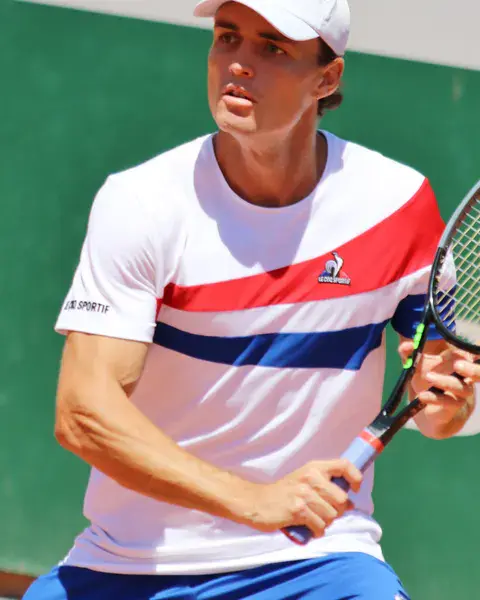 Christopher OconnellAustralia · 2017–2026Career-high ranking: 53
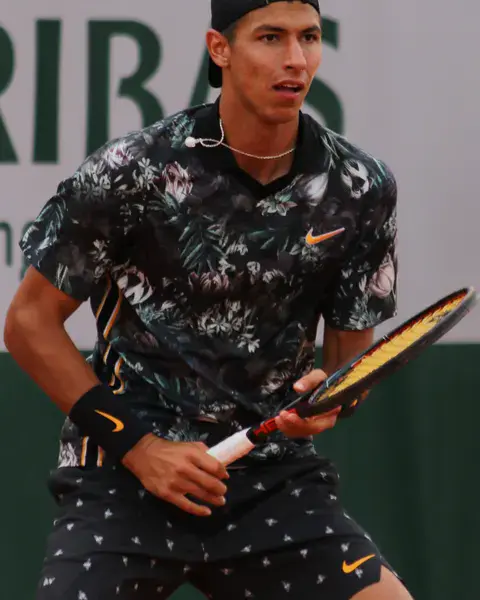 Alexei PopyrinAustralia · 2018–2026Career-high ranking: 19
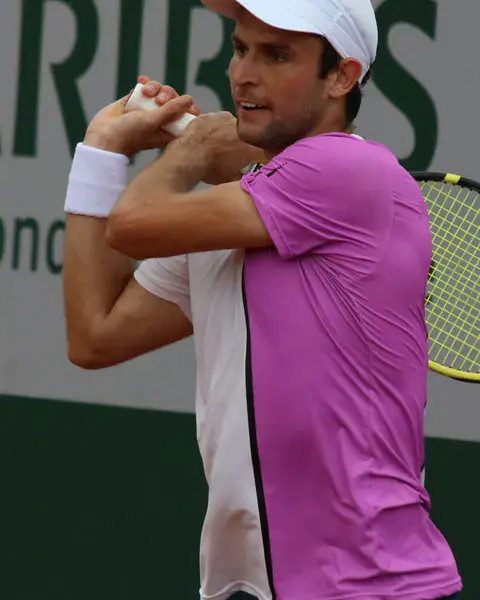 Aleksandar VukicAustralia · 2018–2026Career-high ranking: 48
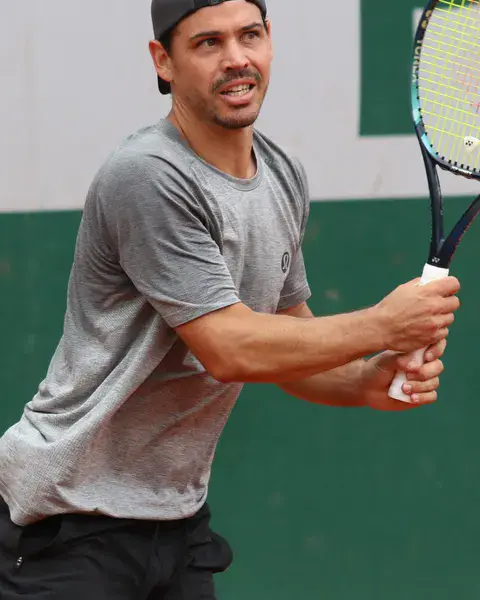 Alex BoltAustralia · 2015–2026Career-high ranking: 125
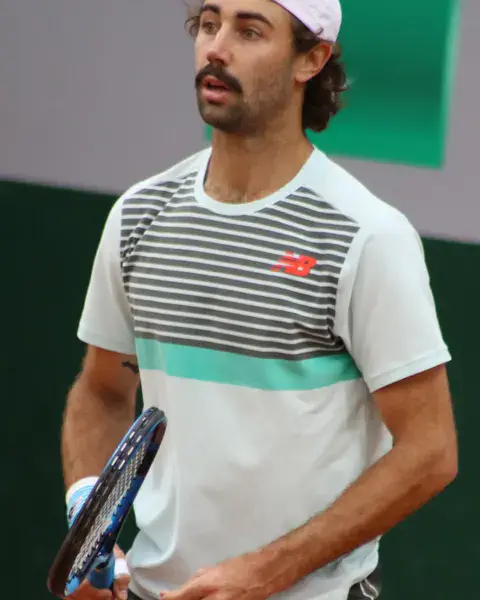 Jordan ThompsonAustralia · 2014–2026Career-high ranking: 26
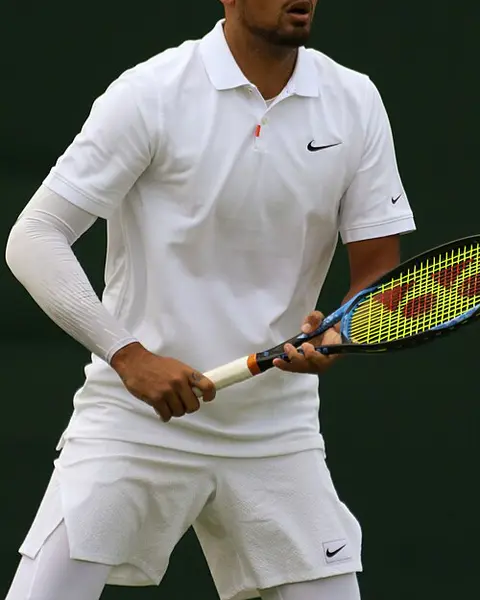 Nick KyrgiosAustralia · 2013–2026Career-high ranking: 13
TENNIS TENSION LAB
Check your racquet’s tension today.
Get a high-precision tension reading in under 10 seconds. Tension Lab tracks changes from your first reading and helps you see when to restring.
- High-precision tension measurement. Ready in under 10 seconds.
- Track every change in feel. See the full story over time.
- Time to restring? Never leave it to guesswork.