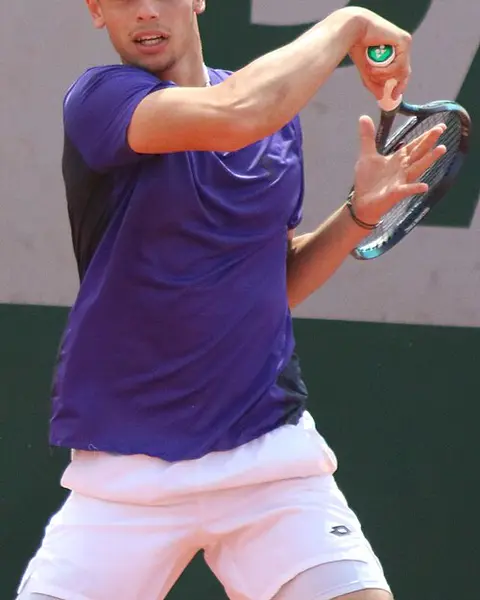
ATP · Active · France
Arthur Géa
ATP#86Ranking as of 2026-08-24
Career-high ranking: 82
Arthur Géa: from a difficult first final to the demands of tour tennis
Arthur Géa is 180 cm tall. His account of a first professional title reveals how movement, confidence and consistency shaped the transition from junior tennis to higher levels.
- Status
- Active
- Age
- Age 21
- Height
- 180 cm
- Playing hand
- Right-handed
- Tour wins
- 3 / 8
- Tour titles
- 1
- Grand Slam titles
- 0
- Career win rate
- 37.5%
Four distinct stages of development
Born on 2 January 2005, Arthur Géa plays right-handed with a two-handed backhand. His runner-up finish in boys’ doubles at Wimbledon and boys’ singles semifinal at the 2023 US Open belong to his junior record. They should be kept separate from results on the professional tour.
His professional milestones include an ITF title in 2023, the Nouméa Challenger title in 2026 and a singles main-draw debut at that year’s Australian Open. The public profile records his first ATP singles title at Los Cabos in 2026, with a final win over Denis Shapovalov. Each was a different kind of breakthrough: ‘first title’ needs a competition level to mean anything useful.
A first title that began with a lost set
In a 2023 interview with the French Tennis Federation, Géa described winning his first professional title at the $25,000 event in Heraklion. He beat Cezar Cretu 2–6, 6–3, 6–2 after reaching his first professional final the previous week. He distinguished the two experiences: nerves had affected the earlier final; in the title match, he felt his opponent had simply played better at the start.
His explanation of the turnaround was practical: he moved better, raised his level and gained confidence as Cretu made more errors. He also said the deciding set had been closer than the score suggested. That is why 6–2 should not automatically be read as comfortable control. The score records games won; it does not reveal how difficult each game was.
What changes between ITF and Challenger tennis
Asked about the step up, Géa said Challenger qualifying often resembled the late rounds of $25,000 events, while the players tended to be more consistent and in control of their tennis. This was his assessment in 2023, not a universal equivalence between tournament levels. Drawing a top-100 opponent, as he had with Grégoire Barrère, could present a very different challenge.
The useful distinction is between producing one excellent shot and reproducing an effective choice through a match. For an emerging player, watch the quality of a deep neutral ball after the first attack has been absorbed. A highlight of the best forehand cannot answer whether that level survives repeated pressure. This is an editorial way to examine the consistency Géa discussed, rather than a measured rating of his strokes.
Two Australian Open matches, two useful questions
Géa qualified for the 2026 Australian Open, beat Jiří Lehečka in the first round and then lost to Stan Wawrinka in five sets. Those matches offer different things to examine: handling a highly ranked opponent and maintaining decisions through an extended contest.
When watching a replay, separate points started with a first serve from points started with a second serve. Does the next ball let him hold an advanced court position? Under pressure, does he create time with height and depth? These are questions for video analysis, not measured claims about his shot speed or how often he uses a particular pattern.
What height and ranking can tell you
His published height is 180 cm. Height affects reach and potential serve contact height; it does not describe return preparation, movement efficiency or contact position. A recreational player of the same height has no particular reason to copy a professional’s racquet weight or string tension.
Read a ranking together with its publication date. A career high, a weekly ranking and a season race describe different things. For a developing player, one deep run can move the weekly number considerably, so the date matters as much as the headline number.
Review a turning point without letting the score explain everything
After a match, choose one service game and one return game from each set. Note the score before the point, whether contact was comfortable or rushed, the first ball that changed court position, and how the point ended. Then compare the lost set with the next one. Look for an observable change before deciding that the whole difference was confidence.
Keep the opponent in the record: a shorter return or an extra error can change the result even when your own shot stays the same. This small review is inspired by Géa’s account of the Heraklion final. It is a practice suggestion for readers, not his training routine or a substitute for analysing a full match.
Results by surface
Read each win rate together with its recorded match sample.
- Hard
- 50.0%6 matches
- Clay
- 0.0%2 matches
Career timeline by age
· Age 20
First recorded tour match
The first main-draw tour match covered by the current data set.· Age 21
Most recent recorded match
The latest tour match included in the current snapshot.· Age 21
Career-high ranking: No. 82
The highest position found in the available weekly singles rankings.
Reviewed sources
A result-based profile built from surface results, rankings, titles, and playing hand. Missing shot-speed, spin-rate, and point-pattern data are not invented.
Player reference page ↗Players to explore next
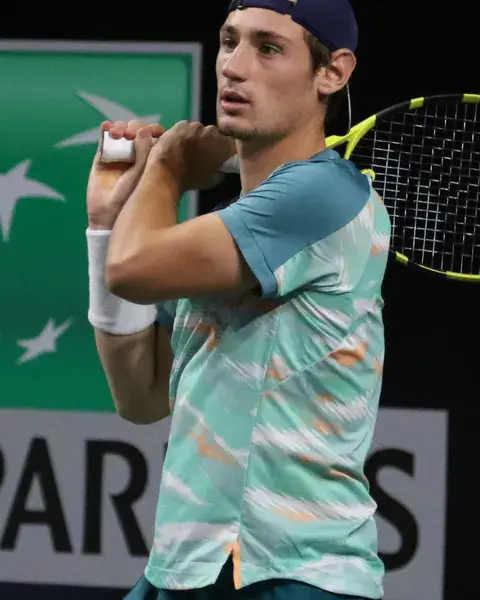 Valentin RoyerFrance · 2025–2026Career-high ranking: 54
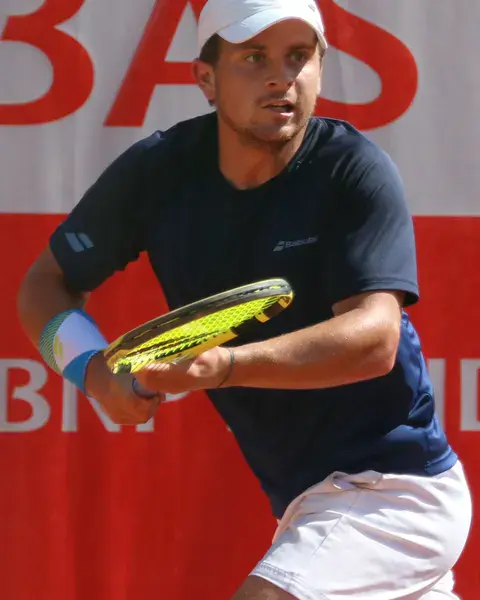 Clement TaburFrance · 2025–2026Career-high ranking: 165
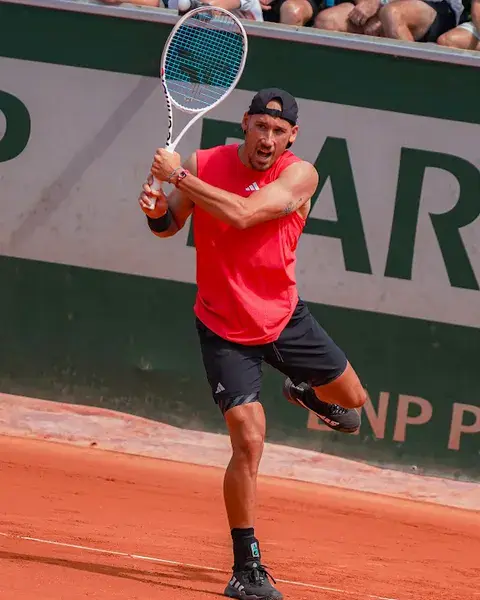 Kyrian JacquetFrance · 2024–2026Career-high ranking: 102
 Ugo BlanchetFrance · 2024–2026Career-high ranking: 139
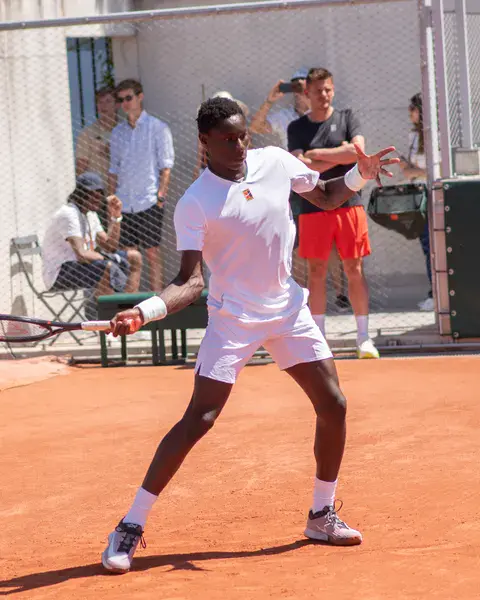 Moise KouameFrance · 2026–2026Career-high ranking: 216
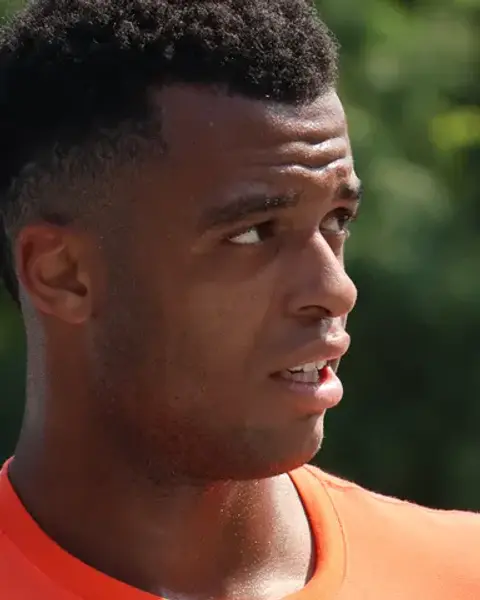 Giovanni Mpetshi PerricardFrance · 2023–2026Career-high ranking: 29
TENNIS TENSION LAB
Check your racquet’s tension today.
Get a high-precision tension reading in under 10 seconds. Tension Lab tracks changes from your first reading and helps you see when to restring.
- High-precision tension measurement. Ready in under 10 seconds.
- Track every change in feel. See the full story over time.
- Time to restring? Never leave it to guesswork.