
ATP · Active · Russia
Daniil Medvedev
ATP#8Ranking as of 2026-08-24
Career-high ranking: 1
Daniil Medvedev: deep returns, flat depth and three 2021 matches that explain the trade-off
Medvedev is often reduced to a deep return position. His 2021 Australian Open semifinal, Roland-Garros loss and US Open final show why the tactic works, where it gives space away and how match context changes the lesson.
- Status
- Active
- Age
- Age 30
- Height
- 198 cm
- Playing hand
- Right-handed
- Tour wins
- 450 / 638
- Tour titles
- 23
- Grand Slam titles
- 1
- Career win rate
- 70.5%
The deep return: more time, more court to defend
Published descriptions identify Medvedev’s deep return position and full-swing returns as distinctive features. Moving back gives him more time to read the serve and prepare the swing. It also increases the distance to a wide serve and leaves more court to cover against a short reply or a serve-and-volley approach.
The useful position is therefore not a fixed distance behind the baseline. It depends on the server’s available directions, whether the server moves forward and the depth of the return. The first return matters, but the receiver’s contact position on the next ball often tells the fuller story.
Australian Open semifinal: 17 aces and the work of moving Tsitsipas
In the 2021 Australian Open semifinal, Medvedev beat Stefanos Tsitsipas 6–4, 6–2, 7–5. The official tournament report listed 17 aces, 88% of first-serve points won, 46 winners and 21 unforced errors for Medvedev. The 88% is not his first-serve percentage; it is the share of points won after the first serve landed.
Medvedev said moving Tsitsipas around was part of the strategy. To read that as tactics, do not stop at the change of direction. Watch where Tsitsipas hits the next ball after moving and whether he has time to recover toward the middle. The point is not simply width; it is what the previous ball makes possible.
The third set was not a straight line. Medvedev led 3–1, Tsitsipas moved ahead 4–3, then Medvedev held at 5–5, broke at 6–5 with a backhand pass and closed the set 7–5. Even a straight-sets win contained a late adjustment, which is why the match is more useful than its clean score suggests.
Roland-Garros quarterfinal: the same opponent, different pressure
A few months later, Tsitsipas beat Medvedev 6–3, 7–6(3), 7–5 in the Roland-Garros quarterfinal. The official report’s first-set serving numbers for Tsitsipas have different denominators: 17 of 20 first-serve points won, 83% first serves in and 20 of 24 total service points won.
Medvedev said the patterns that had worked against Bublik, Garin and Paul were not enough and that he needed to change. That is the practical clay-court lesson. More pace and variety in the report are qualitative descriptions, not measured spin or speed data.
The ending needs careful roles. Medvedev served at 5–6, 40–0, and Tsitsipas won the next five points. Medvedev, not Tsitsipas, served underarm on match point because he felt Tsitsipas was standing deep. Tsitsipas said the pause alerted him. The point is less about the trick serve than about what a deep return position can make the server consider.
US Open final: three 6–4 sets, three different tasks
In the 2021 US Open final, Medvedev beat Novak Djokovic 6–4, 6–4, 6–4 for his first major title. The Guardian’s 15 of 15 first-serve points won figure belongs to the first set. It should not be read as a whole-match first-serve total.
The first set began with Medvedev breaking from 40–15 down in Djokovic’s opening service game. Early in the second set, Medvedev saved 0–40 in his first service game, then two more break points at 1–2 before breaking in the following game. Those passages show how the same score line can hide different pressure points.
In the third set at 5–2, Medvedev double-faulted on championship point and lost serve. Djokovic held for 5–4, and Medvedev served it out on the second attempt. The final is therefore not best remembered as a frictionless performance; it is a match where the lead was built, tested and then finished.
Flat trajectories and repeated depth
Medvedev is listed at 198 cm and plays right-handed with a two-handed backhand. His baseline game is described through relatively flat, deep groundstrokes and the ability to sustain long exchanges. A large frame and strong serve do not mean every point is designed to end immediately.
A flatter trajectory affects travel time and bounce while demanding control of net clearance and length. Watch clearance together with the landing point. A shot looking low on a broadcast is not a measurement of its spin rate.
For club players: test two return positions
Against the same server, receive ten serves near the baseline and ten from a deeper position. Record returns in play, depth and whether you reach a short next ball. A higher return rate from deep can lose value if the next shot repeatedly leaves you stranded.
Ask the server to mix wide and body targets so the exercise does not favour one direction. Adjust to your movement range and the space behind the court. There is no need to copy the exact depth of a professional’s position.
Results by surface
Read each win rate together with its recorded match sample.
- Hard
- 73.7%471 matches
- Clay
- 57.1%91 matches
- Grass
- 67.1%76 matches
Career timeline by age
· Age 20
First recorded tour match
The first main-draw tour match covered by the current data set.· Age 21
First tour title
A verified tour-title milestone in this player’s career.· Age 25
First Grand Slam singles title
A verified Grand Slam milestone in this player’s career.· Age 26
Career-high ranking: No. 1
The highest position found in the available weekly singles rankings.· Age 30
Most recent recorded match
The latest tour match included in the current snapshot.
Reviewed sources
A result-based profile built from surface results, rankings, titles, and playing hand. Missing shot-speed, spin-rate, and point-pattern data are not invented.
Player reference page ↗Players to explore next
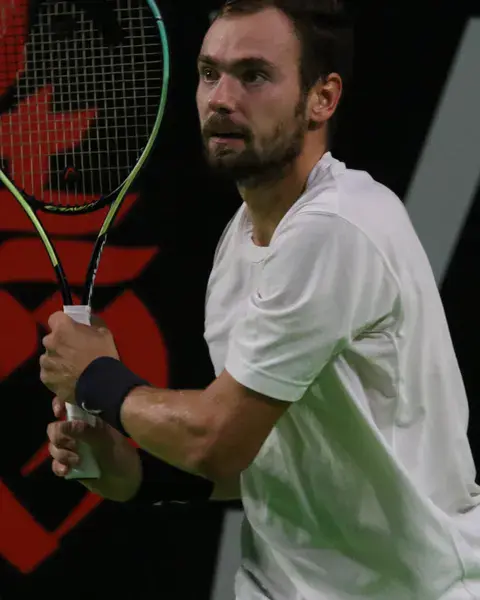 Roman SafiullinRussia · 2017–2026Career-high ranking: 36
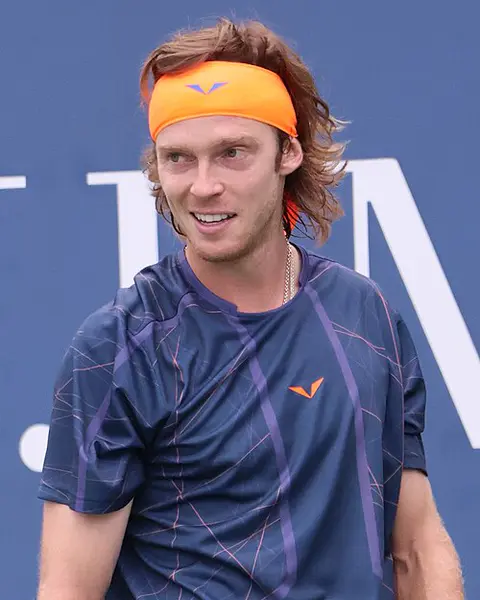 Andrey RublevRussia · 2014–2026Career-high ranking: 5
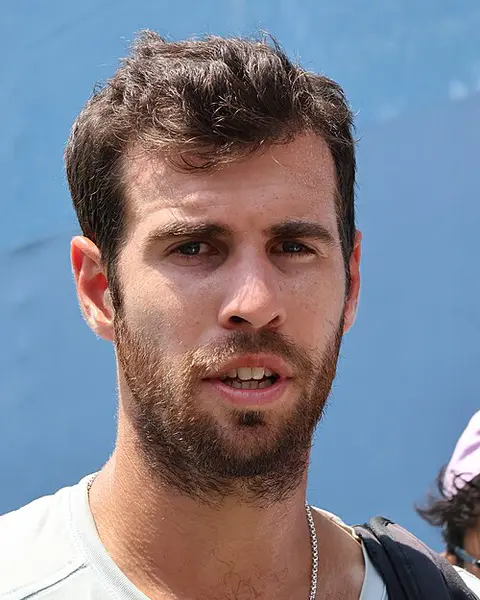 Karen KhachanovRussia · 2013–2026Career-high ranking: 8
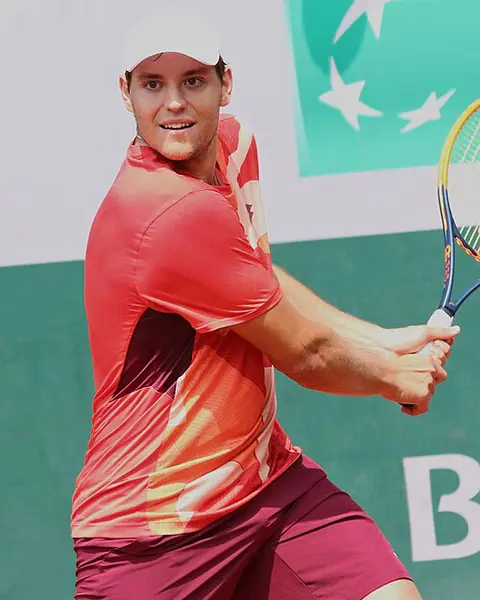 Pavel KotovRussia · 2020–2025Career-high ranking: 50
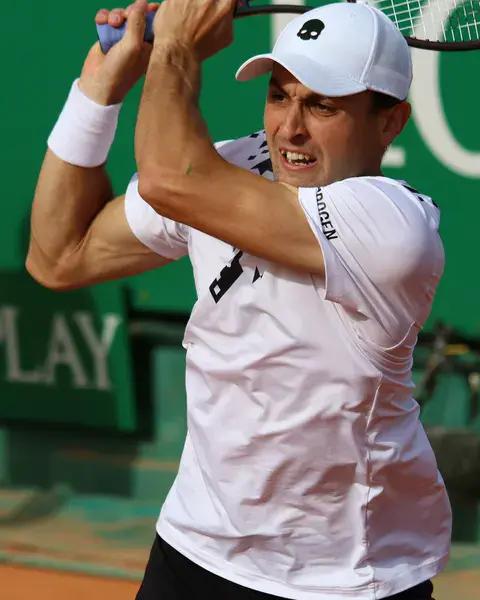 Aslan KaratsevRussia · 2013–2024Career-high ranking: 14
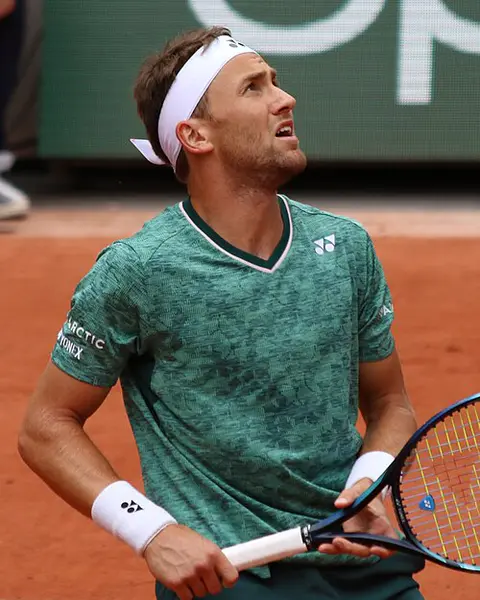 Casper RuudNorway · 2016–2026Career-high ranking: 2
TENNIS TENSION LAB
Check your racquet’s tension today.
Get a high-precision tension reading in under 10 seconds. Tension Lab tracks changes from your first reading and helps you see when to restring.
- High-precision tension measurement. Ready in under 10 seconds.
- Track every change in feel. See the full story over time.
- Time to restring? Never leave it to guesswork.