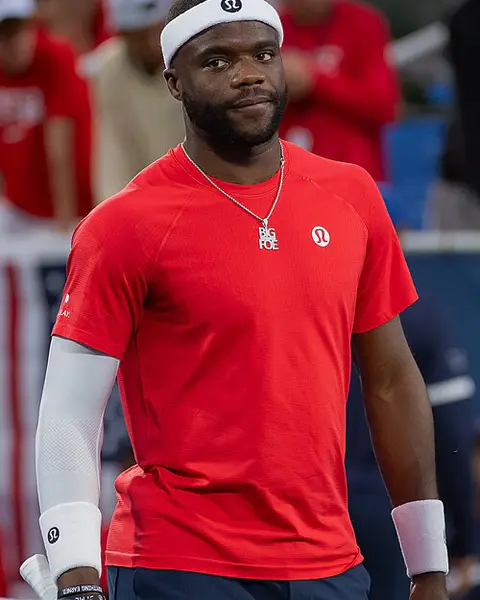
ATP · Active · United States
Frances Tiafoe
ATP#12Ranking as of 2026-08-24
Career-high ranking: 10
Frances Tiafoe: the five-game finish against Nadal and the escape against Rune
Tiafoe’s fourth tour singles title came at Halle in 2026. His 2022 Nadal win and 2024 Rune comeback reveal how serve, return and the next game interact when the score turns against him.
- Status
- Active
- Age
- Age 28
- Height
- 188 cm
- Playing hand
- Right-handed
- Tour wins
- 257 / 482
- Tour titles
- 4
- Grand Slam titles
- 0
- Career win rate
- 53.3%
Houston and Stuttgart presented different demands
Tiafoe won on clay in Houston and grass in Stuttgart in 2023. Added to his 2018 Delray Beach hard-court title, those results completed a set of ATP singles titles across all three surfaces. In the Stuttgart final he saved a championship point against Jan-Lennard Struff and subsequently entered the top 10 for the first time.
Rain delays in Houston required him to win four matches across two days. Recovery time is important context for that run. The surface name alone cannot establish how attacking or defensive a player’s tennis was throughout the event.
Halle 2026 adds a second grass-court title
Tiafoe beat Taylor Fritz 6–4, 6–4 in the Halle final on 21 June 2026. The official ATP draw identifies Tiafoe as champion of the ATP 500 event. Read alongside his career finals record, it was his fourth tour singles title after Delray Beach in 2018 and Houston and Stuttgart in 2023, and his first at ATP 500 level. Challenger and team-event titles are excluded from that count.
The Halle draw also shows a 3–6, 6–3, 7–6 quarterfinal win over Félix Auger-Aliassime followed by a 6–1, 6–3 semifinal win over Daniil Medvedev. A title at another grass event adds evidence beyond the 2023 Stuttgart run. The draw establishes opponents, rounds and scores; it does not establish that a particular serve percentage, return position or string setup caused the result. Those explanations require separate match evidence.
Repeated success in New York and progress elsewhere
Tiafoe reached his first major semifinal at the 2022 US Open and repeated the result there in 2024. He also reached quarterfinals at the 2019 Australian Open and 2025 Roland Garros. Separate repeated success at one event from results that broaden a record across settings.
US Open 2022: five games after falling behind 1–3
Tiafoe defeated second seed Rafael Nadal 6–4, 4–6, 6–4, 6–3 in the fourth round of the 2022 US Open. It was his first US Open quarterfinal, not yet the semifinal he reached later in that run. Nadal had won both previous meetings without losing a set. Those details describe the matchup as it stood that September.
ESPN’s report identifies five breaks of Nadal’s serve, nine Nadal double faults and a first-serve percentage around 50%. The latter is the share of first serves landing in, not the share of points Nadal won behind them. The article also notes Nadal’s adjusted service motion after his abdominal injury. Tiafoe’s return performance is best understood in those particular serving conditions, alongside his ability to protect his own service games.
The decisive fourth-set sequence began with Tiafoe trailing 1–3. He won the last five games, including the breaks for 4–3 and 6–3. His comment about maintaining match intensity fits that sequence: recovering one break still left service games to protect and another return game to win. In a replay, follow those holds as closely as the spectacular returns. They connect the recovery to the finish.
Cincinnati 2024: reaching 5–5 was only one stage of the comeback
In the 2024 Cincinnati semifinal, Tiafoe beat Holger Rune 4–6, 6–1, 7–6(4) to reach his first Masters 1000 final. Rune had led the deciding set 5–2. Tiafoe recovered to 4–5, then saved two match points from 15–40 on his own serve and held for 5–5. The eventual tiebreak win came after that hold; saving match points and winning the match were separate stages.
John Berkok’s report records 25 winners and 19 unforced errors for Tiafoe. On serve, he struck 13 aces and made only one double fault. These match totals describe his overall production. To understand the comeback, put them beside the sequence of games: after Tiafoe won the second set 6–1, Rune immediately rebuilt a 3–0 lead in the third. A strong set had to be followed by a fresh response to pressure.
Compare this with the Nadal finish. In New York, five consecutive games took Tiafoe from a deficit to victory; in Cincinnati, he first had to survive his own service game and then keep playing toward a tiebreak. For practice, start a service game at 15–40 and, if you hold, play the next return game too. Record the serve target, the quality of the first ball after it and readiness for the following point. This proposed exercise trains the continuation after an escape, as well as the escape itself.
The motion is distinctive; the useful lesson is functional
Published descriptions highlight Tiafoe’s serve, forceful forehand and unusual arm motion. For a club player, spacing, contact position and preparation for the next shot are more transferable than the visible shape of that motion. Copying a professional’s mechanics involves different physical and learning conditions.
In slow motion, separate preparation from the actual acceleration phase. Treating the entire racket path as essential movement immediately before contact can make your own swing unnecessarily large. Read the stroke through timing and spacing as well as its appearance.
A two-shot forehand test
Hit towards a broad crosscourt target, then handle the partner’s next ball. Record whether the first shot reaches its target and whether you are prepared for the second. Add pace gradually once both remain reliable.
If greater pace repeatedly produces late contact on the following ball, reconsider how much you can generate within your preparation time. That repeated sequence is a more direct basis for a decision than Tiafoe’s 188 cm height or an equipment model name.
Results by surface
Read each win rate together with its recorded match sample.
- Hard
- 53.9%336 matches
- Clay
- 51.0%102 matches
- Grass
- 54.5%44 matches
Career timeline by age
· Age 16
First recorded tour match
The first main-draw tour match covered by the current data set.· Age 20
First tour title
A verified tour-title milestone in this player’s career.· Age 25
Career-high ranking: No. 10
The highest position found in the available weekly singles rankings.· Age 28
Most recent recorded match
The latest tour match included in the current snapshot.
Reviewed sources
A result-based profile built from surface results, rankings, titles, and playing hand. Missing shot-speed, spin-rate, and point-pattern data are not invented.
Player reference page ↗Players to explore next
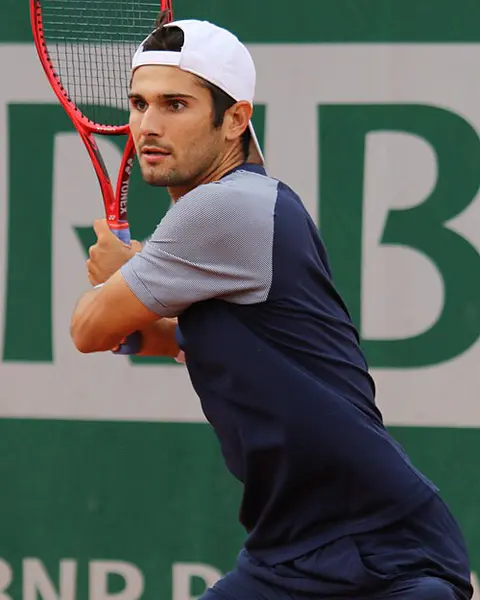 Marcos GironUnited States · 2014–2026Career-high ranking: 37
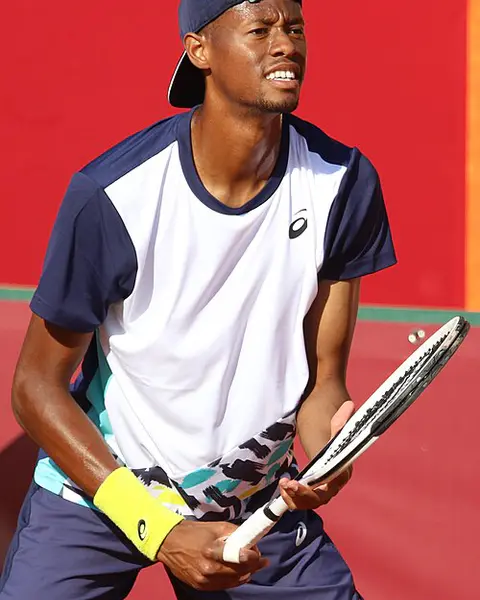 Christopher EubanksUnited States · 2015–2025Career-high ranking: 29
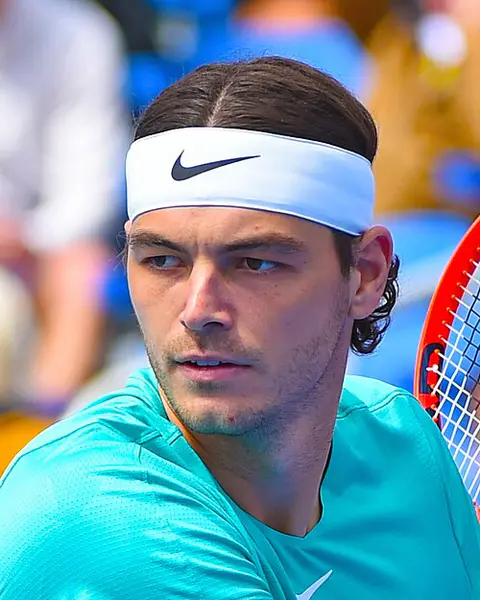 Taylor FritzUnited States · 2015–2026Career-high ranking: 4
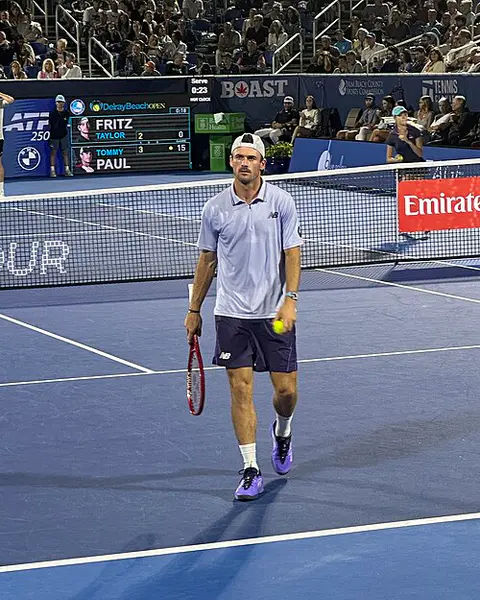 Tommy PaulUnited States · 2015–2026Career-high ranking: 8
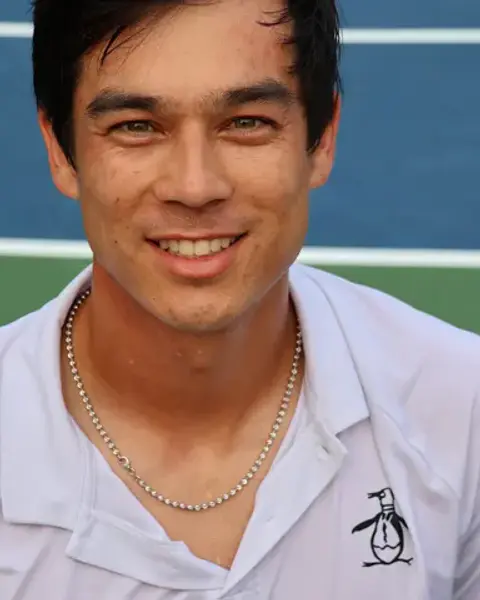 Mackenzie McdonaldUnited States · 2013–2026Career-high ranking: 37
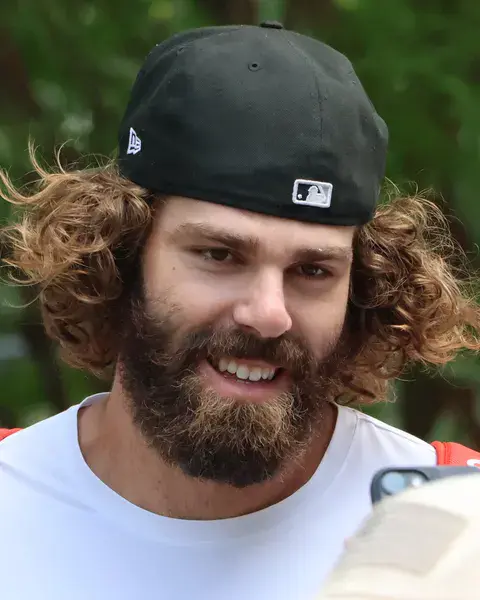 Reilly OpelkaUnited States · 2016–2026Career-high ranking: 17
TENNIS TENSION LAB
Check your racquet’s tension today.
Get a high-precision tension reading in under 10 seconds. Tension Lab tracks changes from your first reading and helps you see when to restring.
- High-precision tension measurement. Ready in under 10 seconds.
- Track every change in feel. See the full story over time.
- Time to restring? Never leave it to guesswork.