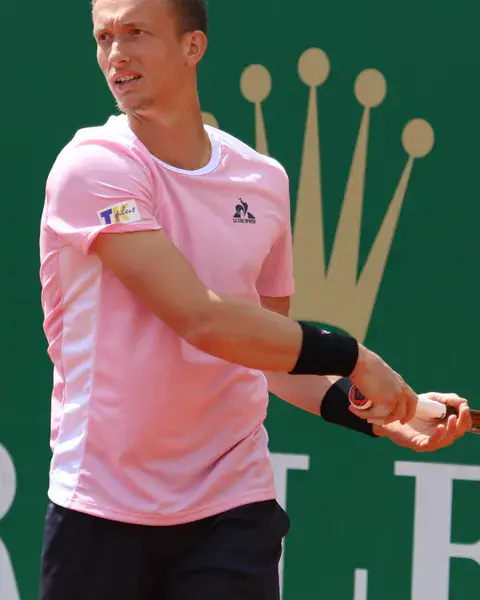
ATP · Active · Czechia
Jiří Lehečka
ATP#19Ranking as of 2026-08-24
Career-high ranking: 12
Jiří Lehečka: how to read the first four shots
Lehečka’s Adelaide and Indian Wells results offer different tests of first-strike tennis. Follow the serve, return and next two shots to distinguish pace from a position that can be used.
- Status
- Active
- Age
- Age 24
- Height
- 185 cm
- Playing hand
- Right-handed
- Tour wins
- 136 / 235
- Tour titles
- 2
- Grand Slam titles
- 0
- Career win rate
- 57.9%
A semifinal in his first tour main draw
Born on 8 November 2001, Lehečka plays right-handed with a two-handed backhand. At Rotterdam in 2022, he qualified and defeated Denis Shapovalov, Botic van de Zandschulp and Lorenzo Musetti before losing to Stefanos Tsitsipas in the semifinals.
That first tour main draw produced a striking result, but one indoor tournament cannot establish competence in every setting. The next question is how the results extend to outdoor hard courts, clay and grass.
A major quarterfinal and a first tour title
Lehečka defeated Cameron Norrie and Félix Auger-Aliassime on his way to a first major quarterfinal at the 2023 Australian Open. In Adelaide in 2024 he beat Jack Draper for his first ATP singles title. A major quarterfinal and a tour title involve different tournament lengths and match formats; neither fits neatly above the other on a single ladder.
The Adelaide semifinal provides a useful comparison with the eventual title match. On 12 January 2024 Lehečka beat third seed Sebastian Korda 6–2, 6–1. ESPN reported that he had dropped only one set on his way to the final. That was the pre-final total. For a review of the week, keep that short semifinal separate from the demands of facing a different opponent for the trophy.
His second title came in Brisbane in 2025, when Reilly Opelka retired in the final. The trophy remains part of the official record, but an assessment of that final must distinguish it from a completed match. Retirements and walkovers matter when interpreting results.
Indian Wells 2024: three opponents, and a first win over Tsitsipas
Lehečka reached his first Masters 1000 quarterfinal at Indian Wells on 12 March 2024 by beating Stefanos Tsitsipas 6–2, 6–4. He was the No. 32 seed and Tsitsipas the No. 11 seed. It was his first victory in their rivalry after losing both previous meetings, giving the result meaning beyond simply advancing one round.
The route included a 3–6, 6–3, 6–4 comeback against Brandon Nakashima and a 6–4, 6–4 win over fifth seed Andrey Rublev. It therefore contained a recovery after losing the opening set as well as two straight-set wins. Calling the whole week a run of effortless hitting would miss the different work needed to reach the quarterfinal.
In the Tennis Majors report, Lehečka credited preparation, activity and aggression in crucial moments. His assessment gives the viewer a useful question: what did the first attacking ball actually produce? Look for a shorter reply, a displaced opponent or room to move forward. Comparing those outcomes is more revealing than assigning the same “aggressive” label to every hard shot.
Read four shots as a sequence of positions
Start with serve, return, the server’s next ball and the receiver’s next reply. At each contact, note whether the hitter is balanced, stretched or still recovering. A fast serve can produce a comfortable return if its placement suits the receiver; a less spectacular serve can create a short reply. The first attack is earned by the position left after the return, not by serve speed alone.
Then separate return depth from return pace. A deep ball through the centre may limit angles and leave the server hitting from behind the baseline. A faster but shorter return may offer an easier forward contact. When watching Lehečka’s first groundstroke, record where he meets the ball and whether the opponent has recovered before the next shot arrives. These contact positions show whether the pace created usable space for the next shot.
Finally, distinguish an available attack from a forced one. A short, high reply and a low ball at full stretch call for different margins. If the first attack fails, replay the return that preceded it before blaming the finishing shot. Use a four-column worksheet for the four contacts: it helps locate the first avoidable problem in the sequence, which may have arisen before the ball that finally missed.
Include serve plus one in a racquet trial
A height of 185 cm is not a sufficient basis for an equipment prescription. When testing racquets, include a serve and the next groundstroke rather than assessing a few fed forehands alone. Can you prepare on time when the first attacking opportunity arrives quickly?
Keep string model, gauge and reference tension comparable, then alternate racquets. Record depth and late contacts. This is a practical way to identify what fits your preparation time rather than choosing equipment because it appears to suit a professional.
Results by surface
Read each win rate together with its recorded match sample.
- Hard
- 59.1%164 matches
- Clay
- 52.9%51 matches
- Grass
- 60.0%20 matches
Career timeline by age
· Age 17
First recorded tour match
The first main-draw tour match covered by the current data set.· Age 22
First tour title
A verified tour-title milestone in this player’s career.· Age 24
Career-high ranking: No. 12
The highest position found in the available weekly singles rankings.· Age 24
Most recent recorded match
The latest tour match included in the current snapshot.
Reviewed sources
A result-based profile built from surface results, rankings, titles, and playing hand. Missing shot-speed, spin-rate, and point-pattern data are not invented.
Player reference page ↗Players to explore next
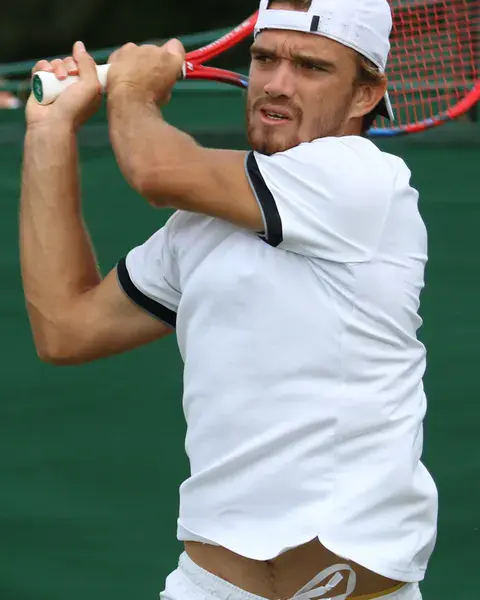 Tomas MachacCzechia · 2020–2026Career-high ranking: 20
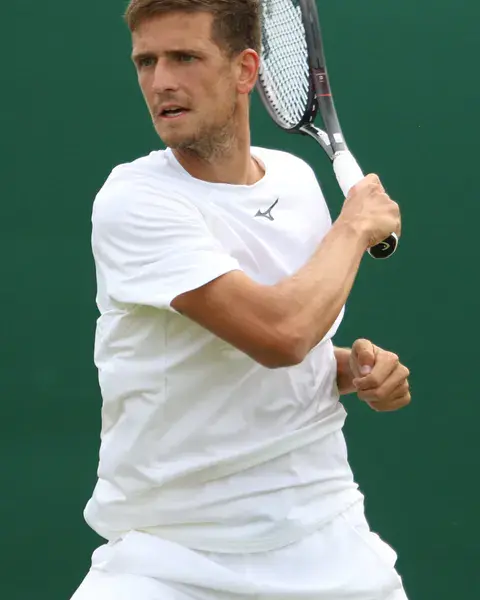 Vit KoprivaCzechia · 2021–2026Career-high ranking: 55
 Jakub MensikCzechia · 2023–2026Career-high ranking: 12
 Dalibor SvrcinaCzechia · 2023–2026Career-high ranking: 86
 Zdenek KolarCzechia · 2018–2022Career-high ranking: 111
 Jiri VeselyCzechia · 2013–2024Career-high ranking: 35
TENNIS TENSION LAB
Check your racquet’s tension today.
Get a high-precision tension reading in under 10 seconds. Tension Lab tracks changes from your first reading and helps you see when to restring.
- High-precision tension measurement. Ready in under 10 seconds.
- Track every change in feel. See the full story over time.
- Time to restring? Never leave it to guesswork.