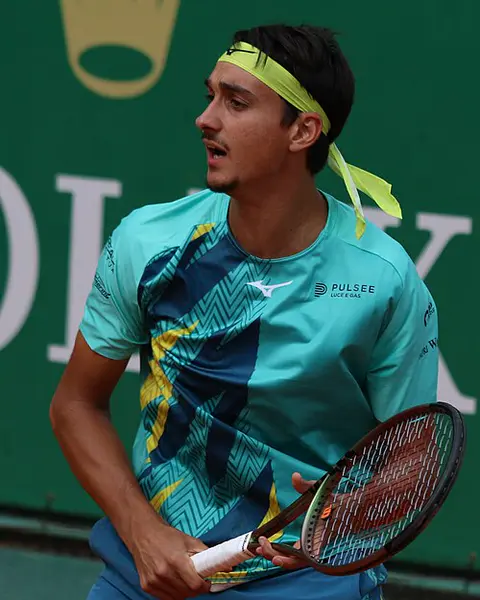
ATP · Active · Italy
Lorenzo Sonego
ATP#91Ranking as of 2026-08-24
Career-high ranking: 21
Lorenzo Sonego: 67 net points won, and why that was not the whole match
Sonego’s first major quarterfinal in 2025 included 90 trips to the net. His Shelton match and the earlier comeback against Rublev show how attacking output, service games and decisive points fit together.
- Status
- Active
- Age
- Age 31
- Height
- 191 cm
- Playing hand
- Right-handed
- Tour wins
- 173 / 364
- Tour titles
- 4
- Grand Slam titles
- 0
- Career win rate
- 47.5%
Why a win over Djokovic came from a lucky-loser entry
At Vienna in 2020, Sonego entered the main draw as a lucky loser after losing in qualifying. He then beat world No. 1 Novak Djokovic 6–2, 6–1 and reached the final, losing to Andrey Rublev. Lucky loser describes an entry route, not an assessment of playing ability.
Three surfaces, different kinds of evidence
Sonego added a hard-court title in Winston-Salem in 2024, defeating Alex Michelsen in the final, to titles already won on grass and clay. He is listed at 191 cm and plays right-handed with a two-handed backhand.
Roland Garros 2023: rebuilding after 5–7, 0–6
In the third round of Roland Garros 2023, Sonego beat seventh seed Andrey Rublev 5–7, 0–6, 6–3, 7–6(5), 6–3. It was his first career win from two sets down and his first top-10 victory at a major. At that point he equalled his best major round, the last 16; the first quarterfinal came later, in Melbourne in 2025.
In the contemporary Tennis Majors report, Sonego said he was two sets down after an hour and focused on playing each point with the right attitude, with the crowd helping him. His account describes how he experienced the recovery. The scoreboard shows that winning the third set was only the beginning: he still had to win a fourth-set tiebreak and another full set.
His 19–17 third-set tiebreak against Taylor Fritz at the same event in 2020 is a separate example of an extended finish. For a useful comparison, track the start of each point: the serve direction, the depth of the return and the first ball the server can attack. That helps locate a repeatable advantage inside a long match, beyond the length of the score itself.
The first major quarterfinal: sustained attack against Shelton
Sonego reached his first Grand Slam quarterfinal at the 2025 Australian Open after wins over João Fonseca and Learner Tien. On 22 January, Ben Shelton stopped him 6–4, 7–5, 4–6, 7–6(4). Simon Cambers’ official tournament report identifies Sonego as world No. 55 at that time, placing this breakthrough in its January 2025 context.
The report records Sonego coming to the net 90 times and winning 67 of those points. It also lists 55 unforced errors for Sonego and 33 for Shelton. A successful net-point total and a losing score can coexist: the points played from other positions and the distribution across service games still count. Those error totals provide a second view of the overall performance alongside the successful net points.
In the second set, Sonego recovered to 5–5 only to lose serve again in the next game. He took the third by breaking in its tenth game. In the fourth-set tiebreak, a missed forehand volley put Shelton ahead 5–4 with two serves to come. Each passage asks a different question: completing a recovery, creating a late break, then executing a volley in a short deciding sequence.
Read the approach, the first volley and the next position
The 67 successful net points are not 67 clean volley winners. A net point can also end with a passing error or another shot, so the count evaluates the outcome of coming forward. To learn from it, separate the approach ball that enabled the move, the height of the first volley and the space left for the next shot. That is more specific than copying how often a professional approaches.
Sonego’s diving backhand volley in the opening game of the second set saved a break point; the fourth-set tiebreak contained the costly forehand-volley miss. Keep both in view. When testing an approach pattern, record whether the entry ball leaves you a comfortable first volley and whether you can cover the reply. Those repeatable conditions offer more guidance than choosing a tactic from either a spectacular save or one decisive miss.
Add one condition to a practice tiebreak
After each point, briefly check whether you executed the intended serve direction and next-shot target. Record the proportion of points in which you carried out those first two choices rather than counting winners alone.
Change the plan when the receiver’s position warrants it. Before switching every target after an error, identify what the opponent actually anticipated. This is a practice suggestion, not a claim about Sonego’s own match instructions.
Results by surface
Read each win rate together with its recorded match sample.
- Hard
- 46.0%198 matches
- Clay
- 47.1%119 matches
- Grass
- 55.3%47 matches
Career timeline by age
· Age 20
First recorded tour match
The first main-draw tour match covered by the current data set.· Age 24
First tour title
A verified tour-title milestone in this player’s career.· Age 26
Career-high ranking: No. 21
The highest position found in the available weekly singles rankings.· Age 31
Most recent recorded match
The latest tour match included in the current snapshot.
Reviewed sources
A result-based profile built from surface results, rankings, titles, and playing hand. Missing shot-speed, spin-rate, and point-pattern data are not invented.
Player reference page ↗Players to explore next
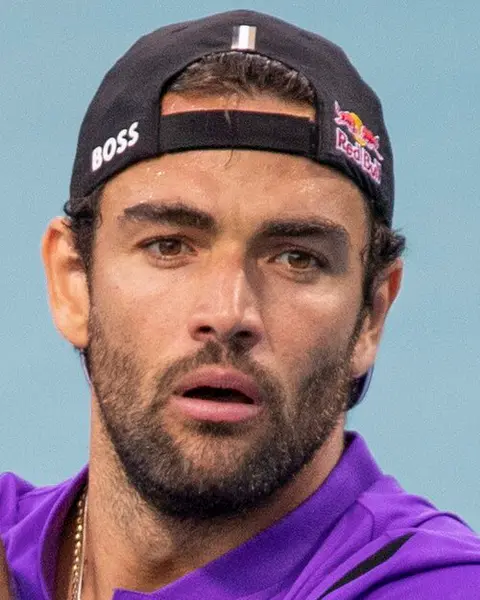 Matteo BerrettiniItaly · 2017–2026Career-high ranking: 6
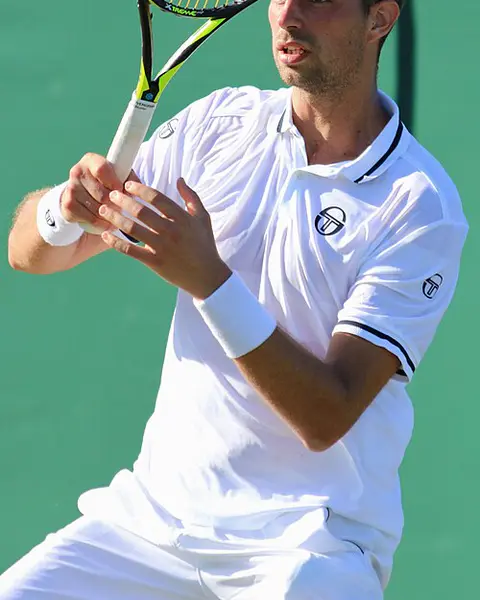 Stefano NapolitanoItaly · 2017–2024Career-high ranking: 121
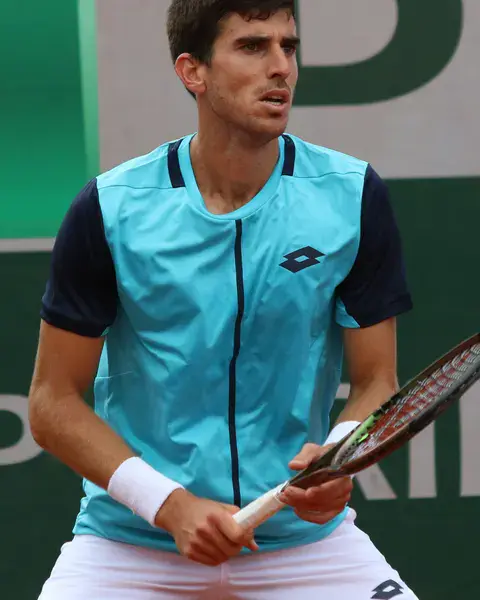 Franco AgamenoneItaly · 2022–2022Career-high ranking: 108
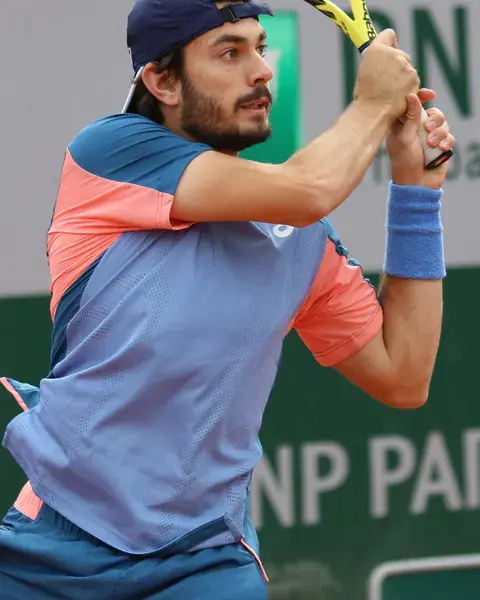 Giulio ZeppieriItaly · 2020–2025Career-high ranking: 110
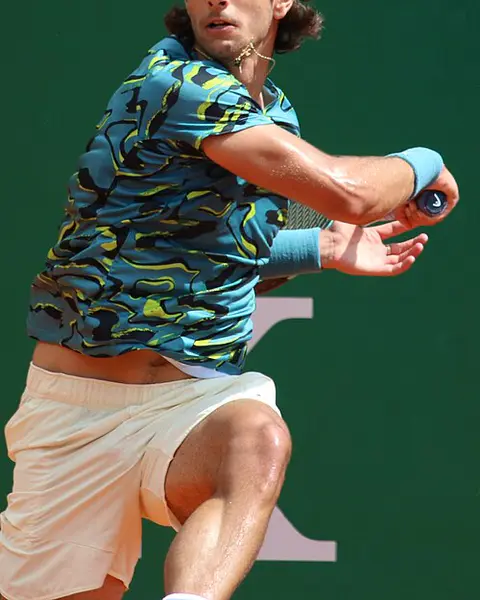 Lorenzo MusettiItaly · 2020–2026Career-high ranking: 5
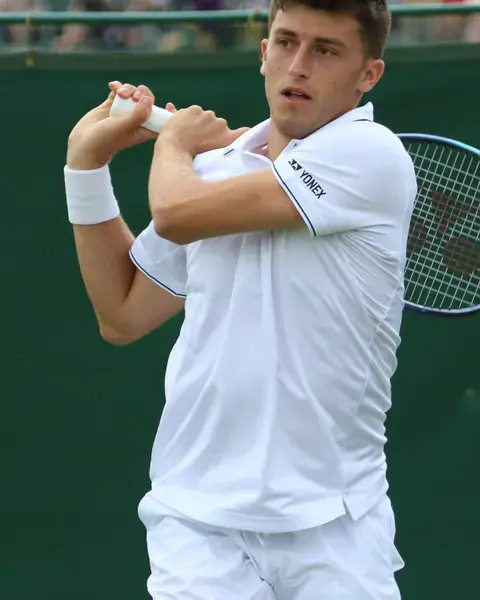 Luca NardiItaly · 2020–2026Career-high ranking: 67
TENNIS TENSION LAB
Check your racquet’s tension today.
Get a high-precision tension reading in under 10 seconds. Tension Lab tracks changes from your first reading and helps you see when to restring.
- High-precision tension measurement. Ready in under 10 seconds.
- Track every change in feel. See the full story over time.
- Time to restring? Never leave it to guesswork.