
WTA · Active · Spain
Paula Badosa
WTA#83Ranking as of 2026-08-24
Career-high ranking: 2
Paula Badosa: 180 cm, and two very different second sets
Badosa’s 180 cm height and career milestones are the starting point. Her matches against Navarro, Kostyuk and Danilovic show how a lead, difficult conditions and sustained attack can change a match.
- Status
- Active
- Age
- Age 28
- Height
- 180 cm
- Playing hand
- Right-handed
- Tour wins
- 172 / 287
- Tour titles
- 4
- Grand Slam titles
- 0
- Career win rate
- 59.9%
Height, birthplace and sporting representation
Born in New York on 15 November 1997, Badosa represents Spain. Her listed height is 180 cm; she plays right-handed with a two-handed backhand. She reached a career-high WTA singles ranking of No. 2 on 25 April 2022. These biographical details place the match examples below in the context of a player who had already become one of the tour’s leading players.
Indian Wells in 2021: beyond the first strike
Badosa won her first WTA singles title in Belgrade in 2021 and defeated Victoria Azarenka in the Indian Wells final that year for her first WTA 1000 title. She subsequently entered the top 10 and reached the WTA Finals semifinals.
To read an attacking baseline game, watch the choice after the opponent absorbs the first attack. Does the hitter maintain crosscourt depth, or attempt a change of direction from an awkward position? That distinction helps explain where an attack remains sustainable and where it breaks down.
US Open 2024: what the 5–1 lead could not secure
Emma Navarro beat Badosa 6–2, 7–5 in their 2024 US Open quarterfinal. In the second set Badosa led 5–1 with two breaks, then lost six consecutive games. David Kane’s contemporary report describes mounting errors and two unsuccessful attempts to serve out the set. The episode concerns closing one set while already a set down, rather than failing to serve out the match.
Navarro said that with Badosa’s lead reduced to 5–2, she sensed Badosa was not confident about finishing the set and wanted to make her think on serve. Her stated aim was to keep pressure on the server even with the set seemingly out of reach. Read alongside the two lost service games, her account directs attention to the work still required to turn a large lead into a completed set.
For a useful replay, separate the two service games from the return games between them. Track whether the first serve starts the point in balance, where the next ball lands, and whether a change of direction follows a short ball or an uncomfortable contact. This gives you specific decisions to examine when a lead shrinks, instead of explaining every error with a general label such as nerves.
Melbourne 2025: accepting the wind, then recovering from 2–5
The next Australian Open supplied a different test in each round. In the third round, Badosa beat Marta Kostyuk 6–4, 4–6, 6–3. In the Tennis Majors report, Badosa said the wind made some instructions from her coach difficult to execute. She linked a better third-set level to accepting the conditions. The useful question is how to keep a playable margin when the ball is not arriving as expected, rather than insisting on the same execution in every setting.
Against Olga Danilovic in the round of 16, Badosa won 6–1, 7–6(2), recovering from 2–5 in the second set. She felt she was still playing well during that deficit and described small points separating the players. The opening 6–1 and the later 2–5 therefore belong to different phases of the same victory. They are not evidence that the entire match was comfortable.
Put that recovery beside the Navarro loss: Badosa has both protected her chances from behind and seen a large lead disappear. A score tells you how far a player is from the set; it does not tell you whether the current patterns are working. When reviewing your own match, record the score alongside contact balance, depth and recovery position. Those observations help distinguish a sound pattern worth repeating from one that needs adjustment.
From Washington to a first major semifinal
After injuries and a ranking decline, Badosa won Washington in 2024, beating Marie Bouzková in the final. She received the WTA Comeback Player of the Year award and reached her first major semifinal at the 2025 Australian Open. The recovery in results took place across months, beyond one memorable victory.
Include the neutral rally after your attack
Attack a short feed, then continue for at least three more exchanges. Record first-attack depth, balance on the next ball and premature changes of direction. A forceful opening followed by repeated late contacts is a reason to reconsider pace or recovery position.
Use that sequence when testing a racquet or string as well. A prepared feed and repeated strokes on the move can feel different. Keeping gauge and reference tension comparable makes equipment differences easier to assess.
Results by surface
Read each win rate together with its recorded match sample.
- Hard
- 58.0%169 matches
- Clay
- 65.2%89 matches
- Grass
- 55.2%29 matches
Career timeline by age
· Age 17
First recorded tour match
The first main-draw tour match covered by the current data set.· Age 23
First tour title
A verified tour-title milestone in this player’s career.· Age 24
Career-high ranking: No. 2
The highest position found in the available weekly singles rankings.· Age 28
Most recent recorded match
The latest tour match included in the current snapshot.
Reviewed sources
A result-based profile built from surface results, rankings, titles, and playing hand. Missing shot-speed, spin-rate, and point-pattern data are not invented.
Player reference page ↗Players to explore next
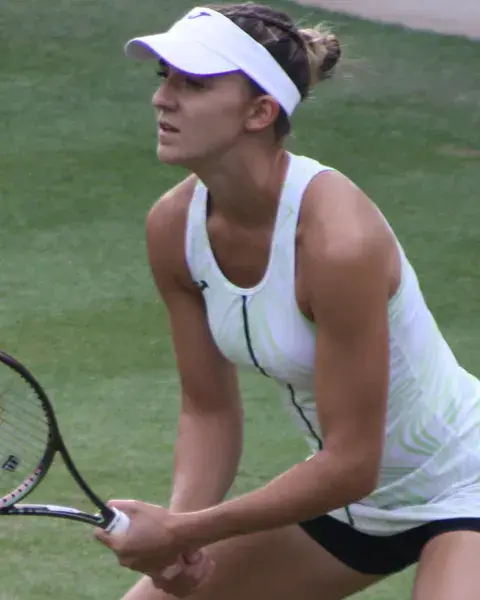 Rebeka MasarovaSpain · 2016–2026Career-high ranking: 62
 Cristina BucsaSpain · 2021–2026Career-high ranking: 30
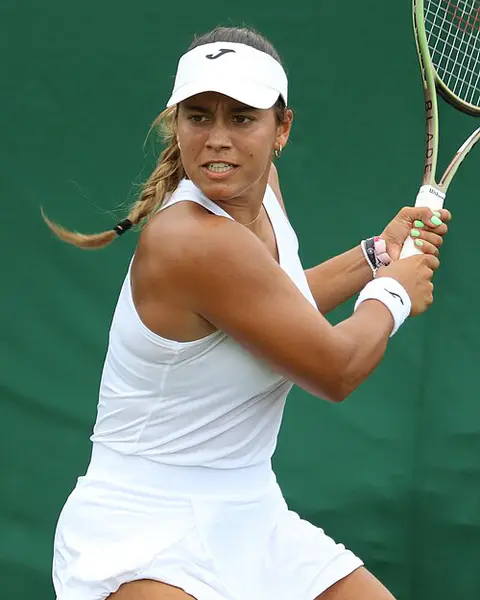 Jessica Bouzas ManeiroSpain · 2023–2026Career-high ranking: 40
 Kaitlin QuevedoSpain · 2026–2026Career-high ranking: 107
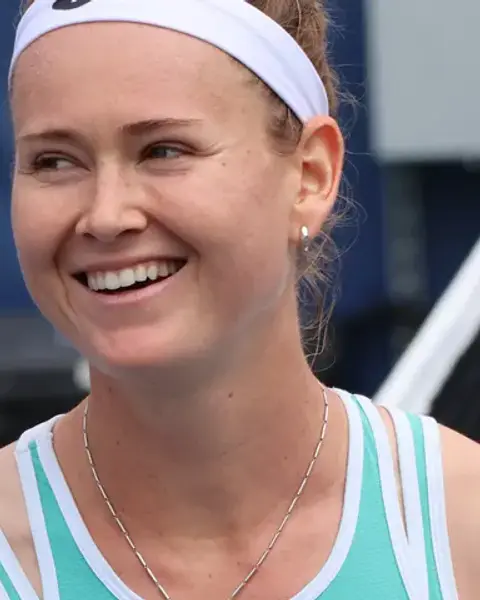 Marie BouzkovaCzechia · 2015–2026Career-high ranking: 21
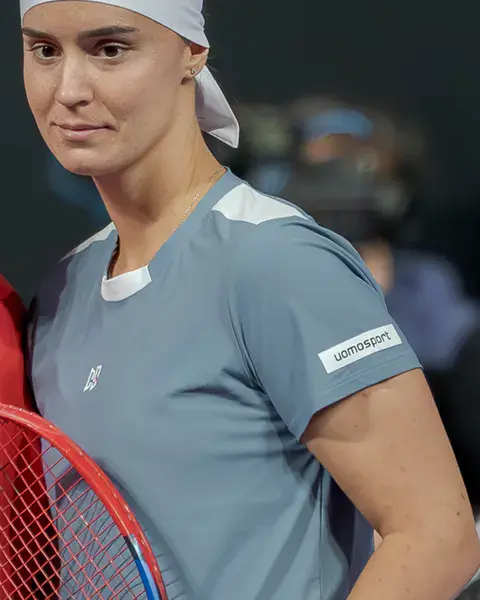 Anhelina KalininaUkraine · 2015–2026Career-high ranking: 25
TENNIS TENSION LAB
Check your racquet’s tension today.
Get a high-precision tension reading in under 10 seconds. Tension Lab tracks changes from your first reading and helps you see when to restring.
- High-precision tension measurement. Ready in under 10 seconds.
- Track every change in feel. See the full story over time.
- Time to restring? Never leave it to guesswork.