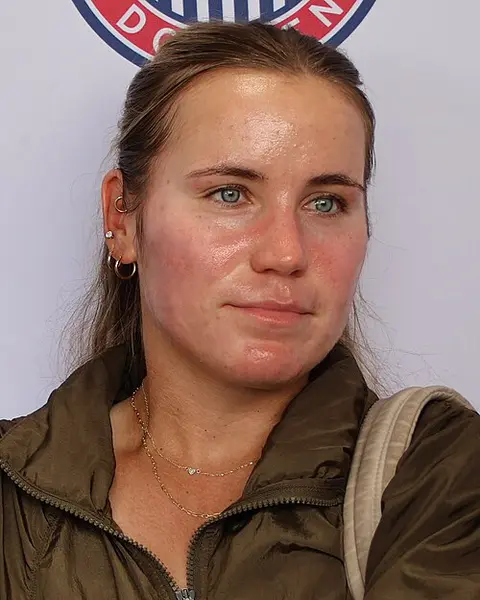
WTA · Active · United States
Sofia Kenin
Career-high ranking: 4
Sofia Kenin: early contact and the five points from love–40
Kenin’s 2020 Australian Open title connects two different problems: surviving Barty’s set points and choosing the right ball against Muguruza. Early timing, rally tolerance and variety all matter.
- Status
- Active
- Age
- Age 27
- Height
- 170 cm
- Playing hand
- Right-handed
- Tour wins
- 176 / 330
- Tour titles
- 5
- Grand Slam titles
- 1
- Career win rate
- 53.3%
Two finals, two different tests
Kenin defeated then-world No. 1 Ashleigh Barty in the 2020 Australian Open semifinals and came from a set down against Garbiñe Muguruza in the final to win her first major singles title. Later that year she reached the Roland Garros final, losing to Iga Świątek.
The Barty semifinal: staying in the set before finding the finish
On 30 January 2020, Kenin beat world No. 1 Ashleigh Barty 7–6(6), 7–5 to reach her first major final. The 14th seed saved four set points, two in each set. A straight-sets result therefore contained two separate passages in which the opponent was one point from taking the set.
ESPN’s report describes first-set temperatures around 38°C and an uneven start from both players. Kenin took 43 minutes to hit her first forehand winner, while 11 of her first 14 points came from Barty’s unforced errors. Those opening points are a useful counterweight to a highlights-only view: staying available for the next ball mattered before Kenin’s forehand produced a winning finish.
For a player known for taking the ball early, this is a reason to watch the rally balls as well as the winners. When the incoming ball is deep, look at how much space is available for contact and whether preparation has finished in time. The useful decision is when early contact preserves control, not whether every ball can be taken at the same point on its rise.
The Muguruza final: five winners, four of them after long exchanges
Kenin won the 1 February final 4–6, 6–2, 6–2. At 2–2 in the deciding set, she faced love–40 on her own serve. The AP report records five consecutive winners to hold: one ace and four groundstroke winners ending rallies of at least 11 shots. She then broke in the next game. The escape and the following return game together turned the score in her favour.
The four rally finishes make this passage more instructive than a simple instruction to attack break points. Kenin had to keep the point going before finding the finishing ball. In a replay, follow the depth and height of the shots before each winner, and the opponent’s position when the direction changes. That is where the opportunity was prepared, rather than just at the final contact.
Across the whole final, Kenin saved 10 of the 12 break points she faced and converted five of her six opportunities on return. The first fraction describes defending her own service games; the second describes breaking Muguruza. Keeping those tasks separate helps explain why the five-point hold was pivotal without mistaking either figure for a share of all points won.
AP also describes Kenin using more shape, spin and drop shots against Muguruza’s harder hitting. Read that observation alongside the long rallies: variation can ask an opponent to adjust both contact height and movement forwards or backwards. When reviewing a drop shot, note where the receiver was standing and whether the preceding ball moved the receiver back. The useful lesson is the change in space, beyond the short ball itself.
Early contact can take time away without extra pace
Rick Macci, who coached Kenin as a child, highlighted her ability to take the ball soon after the bounce. Earlier contact can shorten the opponent’s preparation time without a large increase in ball speed. It also reduces the time available for the hitter’s own preparation and decision.
Watch contact relative to the bounce as well as distance from the baseline. Did the player create space in advance? Preparing late and forcing contact forwards is different from being ready to meet the ball early.
170 cm, a singles high of No. 4 and a separate doubles record
Kenin is listed at 170 cm and plays right-handed with a two-handed backhand. Her career-high singles ranking is No. 4, reached on 9 March 2020. Her separate doubles record includes titles with Bethanie Mattek-Sands in Beijing in 2019 and Miami in 2024.
Change preparation and contact position together
Begin at a comfortable rally pace and hold a consistent position near the baseline. Link the split step to the partner’s contact and keep preparation manageable. The aim is to find a pace at which you can meet the rising ball from balance.
Every ten balls, record late contacts, target depth and losses of balance. If trying to hit earlier increases errors, reduce incoming pace and inspect preparation before moving closer again. This tests the effect of timing rather than reproducing Kenin’s mechanics.
Results by surface
Read each win rate together with its recorded match sample.
- Hard
- 53.5%241 matches
- Clay
- 51.6%64 matches
- Grass
- 56.0%25 matches
Career timeline by age
· Age 16
First recorded tour match
The first main-draw tour match covered by the current data set.· Age 20
First tour title
A verified tour-title milestone in this player’s career.· Age 21
First Grand Slam singles title
A verified Grand Slam milestone in this player’s career.· Age 21
Career-high ranking: No. 4
The highest position found in the available weekly singles rankings.· Age 27
Most recent recorded match
The latest tour match included in the current snapshot.
Reviewed sources
A result-based profile built from surface results, rankings, titles, and playing hand. Missing shot-speed, spin-rate, and point-pattern data are not invented.
Player reference page ↗Players to explore next
 Jennifer BradyUnited States · 2016–2026Career-high ranking: 13
 Kayla DayUnited States · 2016–2026Career-high ranking: 84
 Amanda AnisimovaUnited States · 2017–2026Career-high ranking: 3
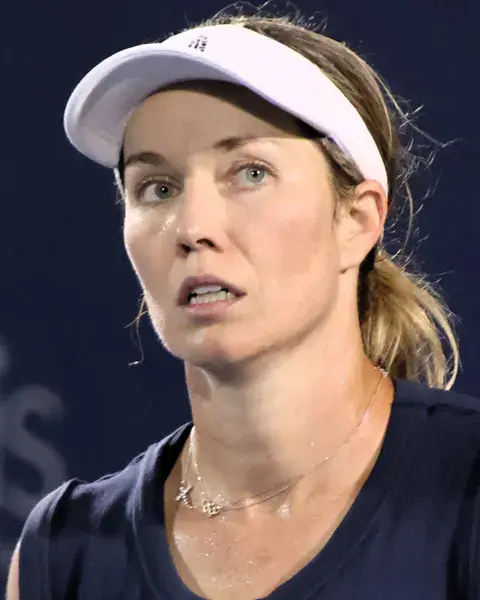 Danielle CollinsUnited States · 2014–2025Career-high ranking: 7
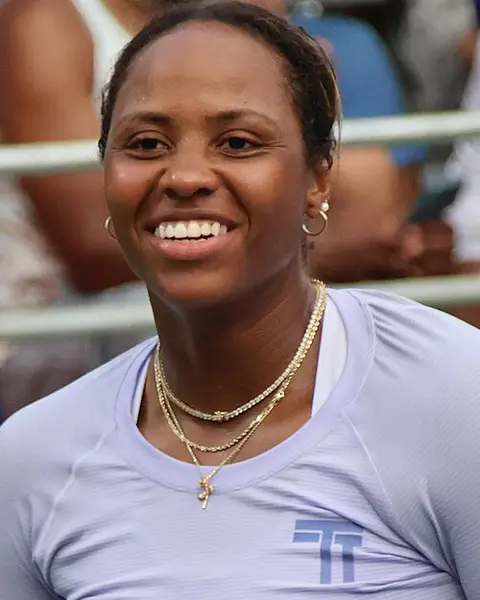 Taylor TownsendUnited States · 2013–2026Career-high ranking: 46
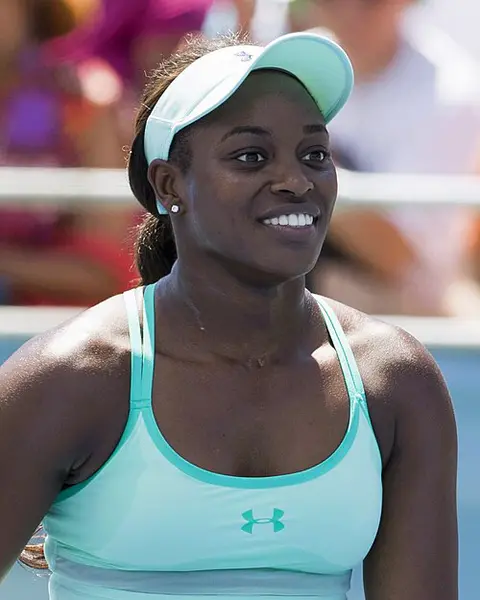 Sloane StephensUnited States · 2010–20261 Grand Slam titles
TENNIS TENSION LAB
Check your racquet’s tension today.
Get a high-precision tension reading in under 10 seconds. Tension Lab tracks changes from your first reading and helps you see when to restring.
- High-precision tension measurement. Ready in under 10 seconds.
- Track every change in feel. See the full story over time.
- Time to restring? Never leave it to guesswork.