Full bed or hybrid: which should you choose first?
Mixing two strings does not simply add their strengths; the mains strongly shape the stringbed's character.
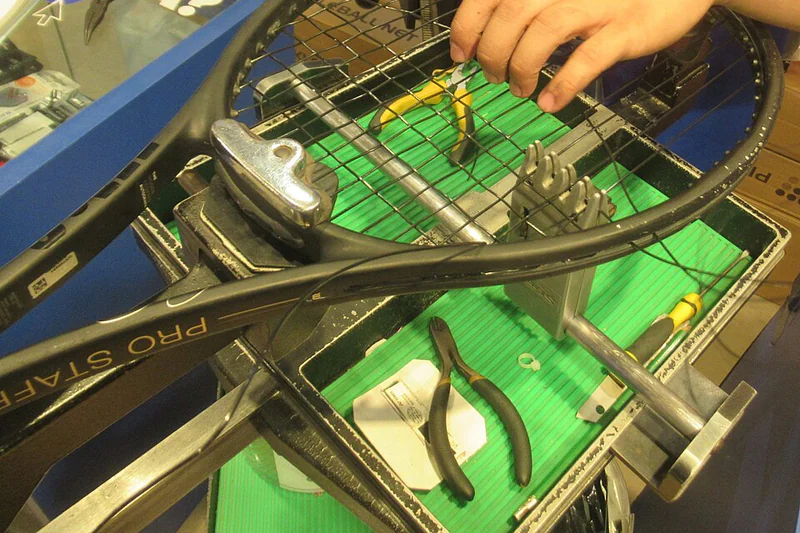
Start with this check
A full bed uses the same product in the mains and crosses, making causes of response and replacement criteria easier to track. HEAD's manufacturer guide offers a useful starting hypothesis that the mains drive a hybrid's priority characteristics, but this is not a universal rule for every material and racquet. Friction between the two strings, gauge, tension, and wear rate add new variables. Without first defining the problem in the current full bed, a hybrid is more likely to multiply possible causes than to combine benefits.
Try these steps in order
- Starting from the date the current full bed was freshly strung, choose one recurring problem: “It breaks too quickly,” “Off-center contact feels harsh,” or “It launches higher than I want.” Write down one quality you already like and will not give up. Choose the mains according to the hypothesis. To preserve the current primary feel, keep the familiar string in the mains and change only the crosses first; to change the setup's main character, change the main material and record why.
- With the stringer, check both materials' recommended ranges, gauges, and expected wear locations. Set the reference tensions within the racquet's permitted range, and do not create an arbitrary large gap between machine settings merely because the materials differ. Compare the reference full bed and hybrid with the same balls and court: 20 crosscourt balls, 10 down-the-line balls, and 10 serves for each. Record height, depth, errors in which the racquet face wobbles, impact feel, and sound.
- After each session, inspect whether the mains or crosses notch first, whether displaced strings return, and how many hours the desired response lasts. If one side remains intact but the other is severely worn, treat that as the useful life of the whole combination. Adopt the hybrid after three playtests only when the target problem declines, the protected quality remains, and the hourly cost is affordable. If the result is unclear, do not add complexity; return to the full-bed reference and change one position again.
Bottom line
A full bed is a clear reference; a hybrid adjusts one complaint in one position. Judge the practical benefit by tracking the mains' role, which direction wears first, satisfactory playing time, and cost.
TENNIS TENSION LAB
Check your racquet’s tension today.
Get a high-precision tension reading in under 10 seconds. Tension Lab tracks changes from your first reading and helps you see when to restring.
- High-precision tension measurement. Ready in under 10 seconds.
- Track every change in feel. See the full story over time.
- Time to restring? Never leave it to guesswork.
Reviewed sources
Technical evidence is shown separately from community topic signals.