Should You Keep the Same Tension When Changing String Material?
Polyester, multifilament, nylon, and natural gut can produce different stringbeds and change at different rates over time, even when each is strung at 50 lb.
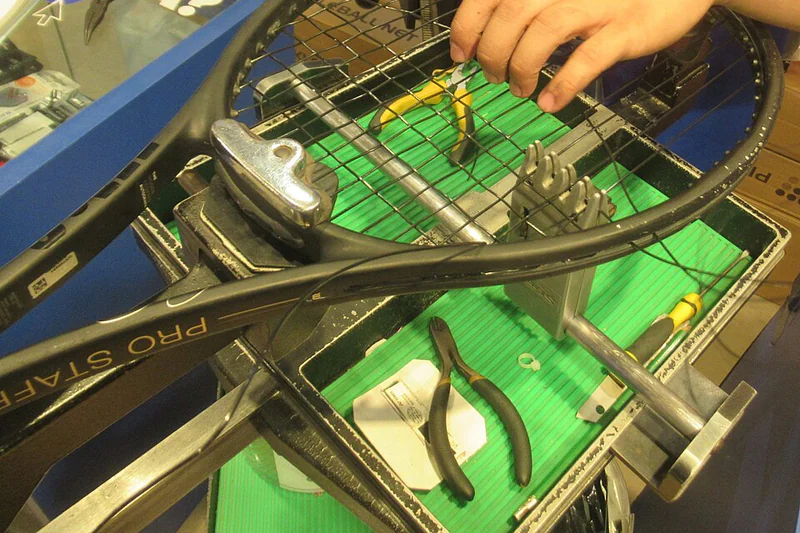
Start with this check
The same reference-tension number does not erase differences between string materials. Dynamic stiffness, elongation and energy return, surface friction, and early tension loss vary by string, so the same machine setting can produce different stringbed stiffness and launch response. Polyester products are often stiffer than nylon-based strings or natural gut, but variation within each material group is too large to assign a value from the word “polyester” alone. Resistance to breakage and the length of time a playable response lasts are also separate qualities; an unbroken string is not necessarily unchanged.
Try these steps in order
- Verify the exact product name, structure, material group, coating status, and actual diameter in mm of the existing and candidate strings on the manufacturer's page or packaging.
- Check the current racquet’s recommended tension range and any guidance from the new string manufacturer. Treat those figures as starting guidance, not a universally correct answer.
- For the first material change, keep the racquet, gauge, stringing machine, and stringer fixed when possible. Avoid making a large tension change at the same time, so you can track which factor changed the response.
- Save the old reference tension, new reference tension, and estimated current tension at the same defined time in separate columns. Note the limits of comparing absolute app readings across different materials.
- For at least two or three sessions using the same drill, record ball depth, net clearance, string movement, notching, impact feel in the arm, and the swing effort needed.
- If the new material does not fit, do not keep adjusting only the numbers; instead, return to the comparison racquet of the original material to separate the material effect from the string tension effect again.
Bottom line
Changing material is not a matter of copying the old number. Build a separate reference setup that accounts for the new string’s actual diameter, stiffness, and tension-loss behavior.
TENNIS TENSION LAB
Check your racquet’s tension today.
Get a high-precision tension reading in under 10 seconds. Tension Lab tracks changes from your first reading and helps you see when to restring.
- High-precision tension measurement. Ready in under 10 seconds.
- Track every change in feel. See the full story over time.
- Time to restring? Never leave it to guesswork.
Reviewed sources
Technical evidence is shown separately from community topic signals.