How to Read the Recommended Tension Range on a Racquet
The tension range printed on the racquet frame is a manufacturer-defined starting constraint, not a personal prescription or performance guarantee. Even its midpoint is not automatically optimal for an individual player.
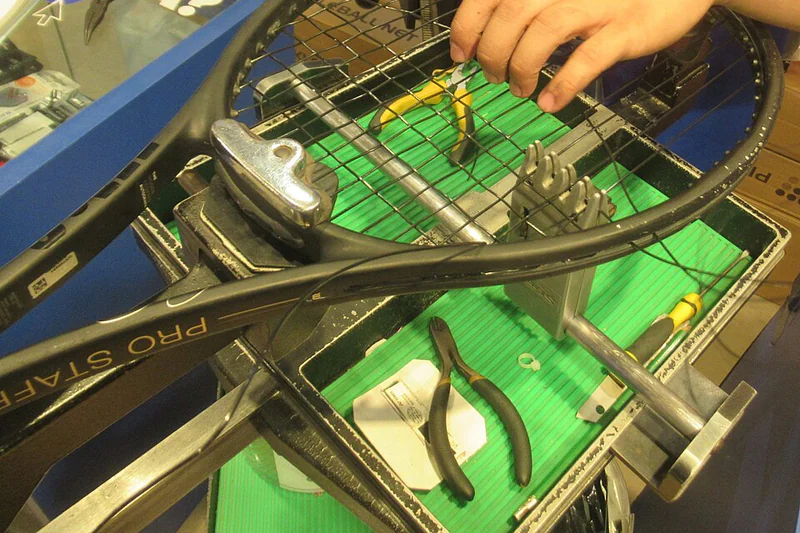
Start with this check
The recommended range describes machine-set reference tension normally entered on a stringing machine. It is not a target range for an app’s estimated current tension after time has passed, nor an acceptable range for overall stringbed stiffness. Within the range printed for that racquet, response still varies with head size, pattern, string material and diameter, stringing method, and the player’s swing. Being inside the range therefore does not guarantee comfort, control, or durability, and a range from another generation with a similar name should not be borrowed.
Try these steps in order
- Photograph the exact model name on the racquet throat, head size, string pattern, product code, and generation. Treat different years or head sizes as separate models even within one product family.
- Verify the units printed on the frame or in the manufacturer’s official documentation. If a label is worn or the source is unclear, do not invent a range; ask the manufacturer or a qualified stringer to identify the model-specific guidance.
- Before stringing, inspect the frame for cracks or deformation and the grommets for collapse or sharp edges. For a used or older frame, have a qualified person confirm that it is suitable to restring before choosing a number.
- Organize the current string product, actual diameter, full-bed/hybrid configuration, and previous machine-set reference tension and results. If there is no reproducible history, start a new record from a conservative baseline within the manufacturer's range.
- Preserve the stringing date and machine-set reference tension as process records, then measure estimated current tension or stringbed stiffness separately at a defined time. Evaluate depth, directional errors, and impact feel in the same serve, rally, and defensive sequence.
- If a change is needed, alter only one variable: switch material or gauge, or adjust reference tension by a small amount. Compare two or three similar sessions and choose a point within the range from repeated personal results, not advertising claims.
Bottom line
The recommended range is a model-specific starting boundary, not your personal optimum or a measurement target. Correct model identification, frame inspection, and one-variable records are needed to find a suitable setup within it.
TENNIS TENSION LAB
Check your racquet’s tension today.
Get a high-precision tension reading in under 10 seconds. Tension Lab tracks changes from your first reading and helps you see when to restring.
- High-precision tension measurement. Ready in under 10 seconds.
- Track every change in feel. See the full story over time.
- Time to restring? Never leave it to guesswork.
Reviewed sources
Technical evidence is shown separately from community topic signals.