Your Strings Got Wet in the Rain: Can You Keep Using Them?
If the feel changes after playing in rain, you cannot immediately calculate how many lb of tension were lost. A wet ball, slippery grip, string material, coating, and added moisture all change together, so safe drying and inspection come first.
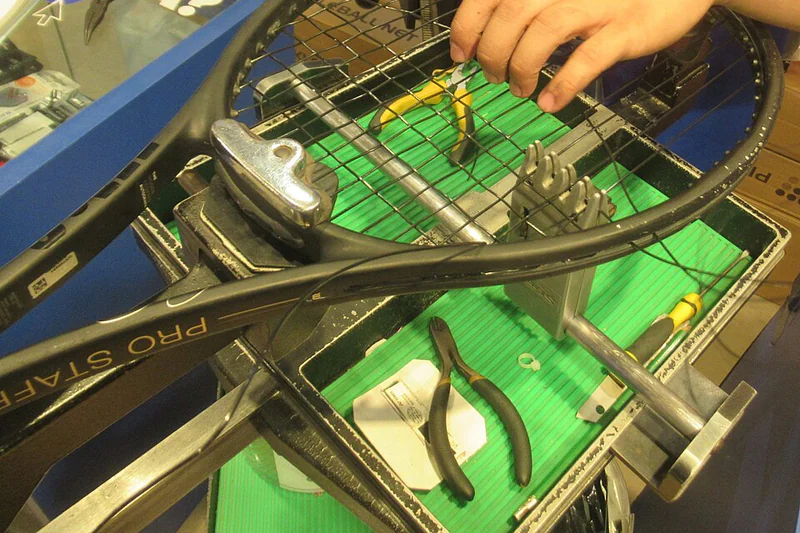
Start with this check
Moisture exposure does not affect natural gut, nylon, and polyester strings identically; the result also depends on coating and existing damage. Moisture control is especially important for natural gut, but not every wet string becomes unusable immediately. Sound-based or app-based estimated-current-tension readings taken while wet are difficult to compare with a normal baseline because the ball, ambient noise, temperature, and moisture conditions have all changed. Preserve machine-set reference tension as a historical process value, then assess the dried stringbed and any estimated reading separately.
Try these steps in order
- If the court is wet and slippery, or if lightning or rain continues, decide to suspend play before diagnosing the equipment. Note which racquets were exposed to rain, the duration of exposure, and whether it was direct rainwater or high humidity.
- Blot moisture from the frame and stringbed with a soft, dry cloth, then leave the racquet out of its case in a well-ventilated indoor area. Do not use a hair dryer, heater, or strong direct sunlight to speed drying.
- Identify the exact string product and material. For natural gut, inspect coating loss, severe fraying, discoloration, and local looseness; for every material, also inspect grommets and the frame for damage.
- Remove the grip, overgrip, and dampener to check for wetness. Also, record the condition of the ball and the court to avoid mistaking results caused by heavy balls or slippery hands for string issues.
- Once the racquet is fully dry and acclimated to the playing location, take three readings with the usual device and measurement position. Use the app value only as an estimated-current-tension trend; without a pre-rain baseline, do not back-calculate an exact loss.
- During a short rally, check impact sound, launch angle, and any irregular response. Stop using the racquet and ask a stringer to inspect it if damage or abnormal response recurs. Add the moisture exposure and subsequent usable life to the replacement log for that material.
Bottom line
Moisture management is about stopping safely, drying gradually, and inspecting damage by material—not applying a tension-correction formula. Preserve the reference setting and record new estimated values and on-court response only after the racquet is dry.
TENNIS TENSION LAB
Check your racquet’s tension today.
Get a high-precision tension reading in under 10 seconds. Tension Lab tracks changes from your first reading and helps you see when to restring.
- High-precision tension measurement. Ready in under 10 seconds.
- Track every change in feel. See the full story over time.
- Time to restring? Never leave it to guesswork.
Reviewed sources
Technical evidence is shown separately from community topic signals.