lb and “kg” (kgf): How to Convert and Record Tension Clearly
A missing unit can turn a correct number into a very different request: 25 kgf is not 25 lbf. Keep every original value attached to its unit before converting or rounding it.
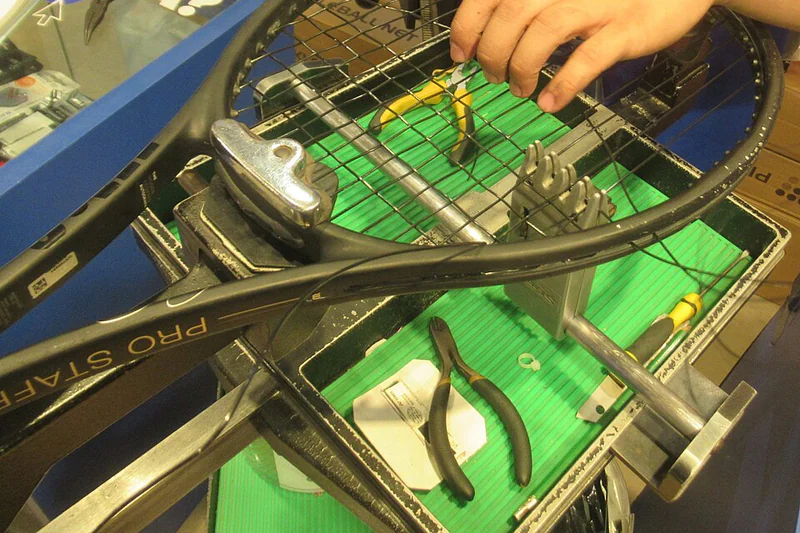
Start with this check
In tennis, a value casually called “kg” usually means kilogram-force (kgf), not the mass unit kg; 1 kgf is approximately 2.2046 lbf. A stringing label such as 52 lb or 23.6 kg (meaning kgf) records the machine-set reference tension used while pulling a string. Do not overwrite that field with an app’s estimated current tension or with stringbed stiffness from a separate device: the three values have different names and roles. Extra decimal places in a conversion do not make the result more precise than the machine increment, rounding, and stringing-process variation.
Try these steps in order
- Check previous receipts or racquet labels and place the original unit directly after the number, such as 52 lb. Do not guess the unit for an old unitless note; mark it “unverifiable.”
- To convert lb to kgf, divide by 2.2046; to convert kgf to lbf, multiply by 2.2046. Preserve the original value separately so repeated forward-and-back conversion does not accumulate rounding error.
- Confirm which unit the stringing machine displays. State both number and unit for each direction in the request, such as “Mains 23 kgf, crosses 23 kgf.” For a hybrid, include each string material and gauge.
- Record the stringing date, racquet model, string product and diameter, stringing machine or shop, and pre-stretch. This keeps unit conversion separate from the other process variables that may explain a later difference.
- At a repeatable time after stringing, record the app’s estimated current tension or stringbed stiffness from a separate device in distinct fields. The purpose is to establish a baseline for that racquet, not to make either result equal the reference setting.
- Before the next stringing job, read the recorded request back and have the stringer confirm it. Round conversions to a realistic increment supported by the machine, and do not treat tiny decimal differences as performance differences.
Bottom line
A useful tension record identifies the value type and unit before interpreting the number. Keeping the original setting, converted value, estimated current tension, and stringbed stiffness separate makes later stringing jobs far more reproducible.
TENNIS TENSION LAB
Check your racquet’s tension today.
Get a high-precision tension reading in under 10 seconds. Tension Lab tracks changes from your first reading and helps you see when to restring.
- High-precision tension measurement. Ready in under 10 seconds.
- Track every change in feel. See the full story over time.
- Time to restring? Never leave it to guesswork.
Reviewed sources
Technical evidence is shown separately from community topic signals.