The One-Variable Rule for Useful Tension Tests
If you change the racquet, string model, gauge, and tension at once, you may feel an improvement without knowing what to choose next. The one-variable rule is not a perfect laboratory; it is a habit that keeps the next decision explainable.
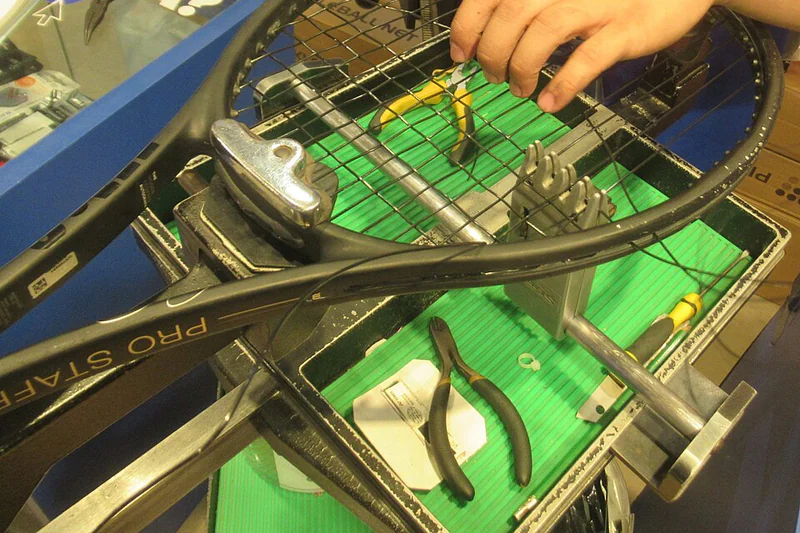
Start with this check
Tennis equipment variables interact. The same reference tension can produce different stringbed stiffness across frames, patterns, and materials, while an app’s estimated current tension depends on time and measurement conditions. Balls, court, fatigue, and expectation also shift the outcome. Changing one factor does not prove absolute causation, but it narrows the plausible explanations more than changing several factors together. Without a goal and observation criteria defined in advance, it is easy to reinterpret the result afterward to fit a “good feeling.”
Try these steps in order
- Summarize the current racquet, string product and diameter, machine-set reference tension, stringer and machine, stringing date, cumulative playing time, and baseline measurement in one row. Keep this unchanged as the pre-change control.
- Rewrite the problem as one observable statement, such as the share of balls landing long, net-error count, impact feel on one stroke, or predictability. Avoid a vague goal such as “a better setup.”
- Write the variable and intended direction before the test. For a small tension change, keep the racquet, product, and diameter fixed. For a material change, hold the reference setting only where the frame and both string manufacturers' guidance permits; otherwise record the necessary tension change as a confounder.
- Store post-stringing reference settings in a Process column, and estimated current tension or stringbed stiffness at the defined time in separate Result fields. Record device, location, environment, and whether measurement occurred before or after play.
- With the same balls, court, and drill order, take 10 attempts at the target zone and evaluate serves and pressure situations. Record net, short, long, and left/right errors plus physical condition, then reverse the racquet order and repeat.
- After two or three similar sessions, decide whether to keep, reverse, or make the next change. Mixed results are not automatically failure; document environmental and measurement limits and repeat the comparison.
Bottom line
A one-variable test aims to create personal evidence for the next choice, not a universal law. Keeping the baseline setup, predeclared goal, consistent procedure, and interpretation limits together can reduce trial and error.
TENNIS TENSION LAB
Check your racquet’s tension today.
Get a high-precision tension reading in under 10 seconds. Tension Lab tracks changes from your first reading and helps you see when to restring.
- High-precision tension measurement. Ready in under 10 seconds.
- Track every change in feel. See the full story over time.
- Time to restring? Never leave it to guesswork.
Reviewed sources
Technical evidence is shown separately from community topic signals.