When to Restring Before the String Breaks
A string can change in launch angle, snapback, and feel before it breaks, so the calendar and appearance alone do not determine restringing time.
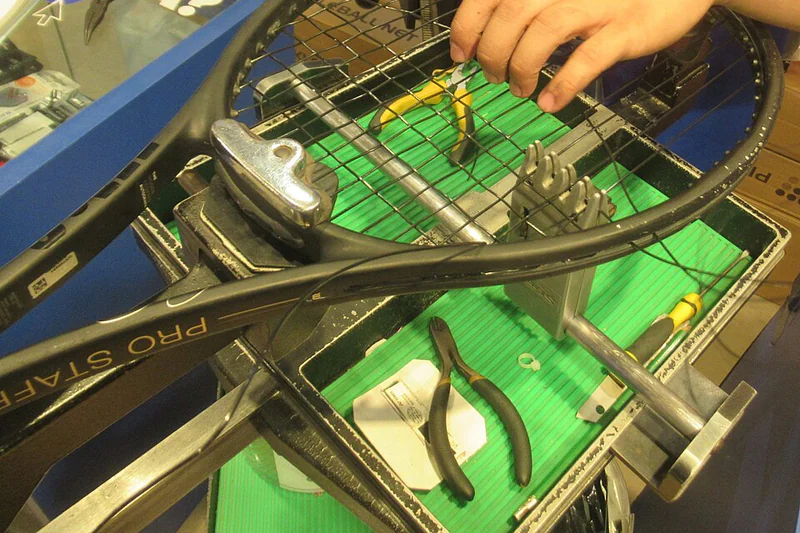
Start with this check
All strings begin to relax after installation and continue changing with impact and time. Wear clues differ by material: multifilament may fray, natural gut can show fiber or moisture damage, and polyester may develop deep notching or mains that stop returning to position. A decline in estimated current tension from your baseline is useful as a trend, but it does not capture every change in energy return, friction, or surface condition. Conversely, an apparently stable reading can coexist with erratic launch or discomfort, so there is no universal threshold such as “always replace at X%.”
Try these steps in order
- Record the stringing date, the time of the first reference measurement, the string product, gauge, reference tension, and cumulative playing time for each setup.
- After a session, take a photo in the same lighting to check the center contact zone for notching, fraying, discoloration, or cracking, and gently move one main string to see how readily it returns.
- Record whether the ball suddenly flies long or falls short, whether directional misses increase, or whether a changed impact sensation or sound repeats across several sessions.
- Measure estimated current tension with the same procedure, but do not compare it directly with the stringing-machine setting. Interpret only the change from your personal post-stringing baseline.
- Before an important match, restring before several performance-decline signals overlap, allowing practice time to adapt to the fresh setup, and keep a familiar spare racquet.
- Compare several replacement cycles to identify signals that recur for your material and playing volume, then schedule personal inspection reminders around them.
Bottom line
Choose restringing time from overlapping personal signals: estimated-current-tension trend, cumulative use, wear, snapback, and shot consistency—not a calendar or one loss percentage.
TENNIS TENSION LAB
Check your racquet’s tension today.
Get a high-precision tension reading in under 10 seconds. Tension Lab tracks changes from your first reading and helps you see when to restring.
- High-precision tension measurement. Ready in under 10 seconds.
- Track every change in feel. See the full story over time.
- Time to restring? Never leave it to guesswork.
Reviewed sources
Technical evidence is shown separately from community topic signals.