What to Check When a String Breaks Near the Frame
When a string breaks early near the frame instead of at a center intersection, inspect the break location, grommet, and shot immediately before it before changing machine-set reference tension. Location is a clue for the next inspection step, not proof of one cause.
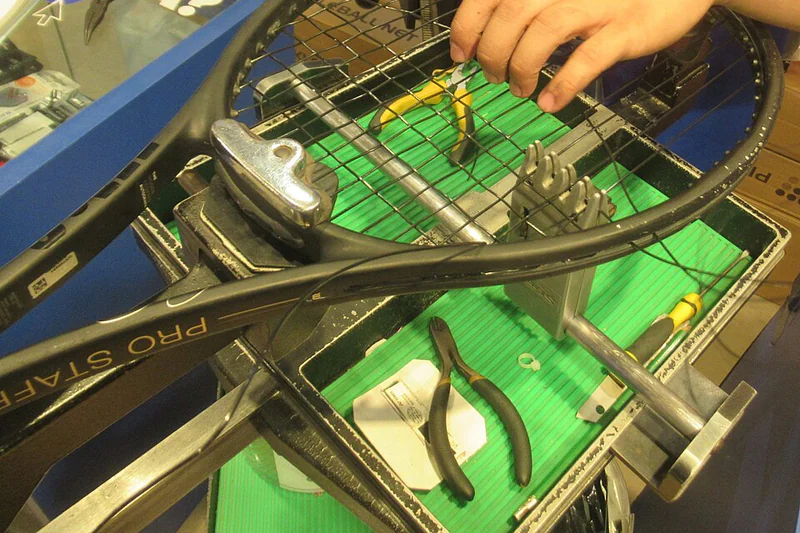
Start with this check
Repeated friction can build notching and wear around the primary contact zone. A break near the frame has several possible causes, including off-center contact, a damaged or sharp grommet, or localized damage during handling or stringing. A center break is not always normal, and an edge break is not automatically a stringing error. Consider the exact string, diameter, playing time, contact location, and accidental impact together. Estimated current tension and stringbed stiffness cannot identify the cause from location or reconstruct the tension of one string immediately before it broke.
Try these steps in order
- Stop using the racquet. Photograph both sides, showing whether the broken string is a main or cross, its clock position on the frame, and the exact grommet hole. Capture the broken end and nearby intersections before the strings shift.
- Record whether the break occurred on centered contact, off-center contact, or while picking up a ball or during storage. Link that event to the stringing date, cumulative playing time, exact string and diameter, and reference-tension setting for each direction.
- In bright light, visually inspect nearby grommets for splits, collapse, missing pieces, or sharp edges, and inspect the frame for cracks. Do not probe a sharp area with a finger or tool.
- Compare notching and surface wear in the primary contact zone with other locations. If older break photos exist, check whether the same hole is involved, distinguishing one event from a recurring pattern.
- Show the photos and stringing record to an experienced stringer for inspection of the frame, grommets, and suitability for another job. Have broken strings removed and grommets replaced with a safe procedure appropriate to the frame.
- After addressing plausible causes, restring with the same product, diameter, settings, and a similar process, then record playing time. If the same location breaks again, inspect the frame, grommet, and stringing path instead of changing tension alone.
Bottom line
Break location is a diagnostic clue, not a verdict. Photos, contact circumstances, cumulative time, and grommet condition reveal localized damage and recurring patterns before you decide whether tension needs to change.
TENNIS TENSION LAB
Check your racquet’s tension today.
Get a high-precision tension reading in under 10 seconds. Tension Lab tracks changes from your first reading and helps you see when to restring.
- High-precision tension measurement. Ready in under 10 seconds.
- Track every change in feel. See the full story over time.
- Time to restring? Never leave it to guesswork.
Reviewed sources
Technical evidence is shown separately from community topic signals.