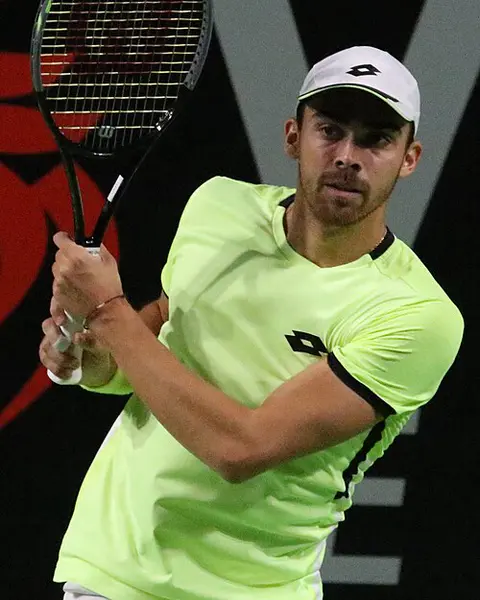
ATP · Active · France
Benjamin Bonzi
Career-high ranking: 42
Benjamin Bonzi: how a long service game became part of a title run
Bonzi’s first ATP title in Metz was decided through more than a close score. Examine the nine break points concentrated in one game, the opening tiebreak and the different demands of a five-set comeback.
- Status
- Active
- Age
- Age 30
- Height
- 183 cm
- Playing hand
- Right-handed
- Tour wins
- 63 / 147
- Tour titles
- 1
- Grand Slam titles
- 0
- Career win rate
- 42.9%
The junior doubles link with Quentin Halys
Born on 9 June 1996, Bonzi is listed at 183 cm and plays right-handed with a two-handed backhand. He won the 2014 Roland Garros boys’ doubles title with Quentin Halys. Their shared junior record belongs in a different category from senior ATP singles results.
His career-high ATP singles ranking is No. 42, reached on 6 February 2023. A current ranking needs its own publication date. Treating a career best as a measure of present form obscures the path of a player rebuilding his position.
What six titles in one season establish
Bonzi won six Challenger singles titles in 2021, including three in consecutive weeks at Saint-Tropez, Cassis and Rennes. That run demonstrates repeated success across full tournament weeks, rather than a single exceptional result.
Consistency at Challenger level does not automatically transfer to the ATP Tour. The opposition, time available against serve and return, and draw composition change. Combining results from different levels into one win percentage hides an important part of that transition.
Metz 2024: qualifying, a close first set and an early second-set break
Bonzi entered Metz in 2024 ranked No. 124 and came through qualifying to win his first ATP singles title. His main-draw victories included Casper Ruud and Alex Michelsen before the final against Cameron Norrie. The route matters: the final was the end of a successful tournament sequence, not his first exposure to the court that week.
He beat Norrie 7–6(6), 6–4 on 9 November. The first-set tiebreak finished 8–6; the number in parentheses in 7–6(6) is the losing player’s tiebreak score. Sky Sports reports an exchange of breaks for 4–4, followed by a long Bonzi service game in which Norrie missed nine break points. Bonzi later won the tiebreak, then broke at 1–1 in the second set.
The first set had therefore required repeated recovery inside a game and then a separate tiebreak. The second was shaped by an early break and protecting that advantage. Treating the whole final as one uninterrupted period of dominance would miss those different tasks. The report establishes the score and the opportunities; it does not supply a serve-location map or a shot-by-shot explanation for all nine saves.
Nine break points are not nine service games
A receiver can earn several break points in the same game as the score repeatedly returns to deuce. Saving nine in one game leaves the server with one hold on the scoreboard, not nine holds. Likewise, failing to convert them does not mean the receiver created chances in nine different return games. This distinction is essential when using a match total to judge who was consistently applying pressure.
For a closer review, separate three questions: how many service games contained a break point, how many chances appeared inside each, and what happened immediately after the long game. The Metz report identifies a concentration of pressure in one game; it does not justify assigning every escape to an ace, a second-serve risk or a Norrie error. Those explanations require the actual points.
Melbourne 2023: a 6–1 set did not remove the next test
Bonzi’s first major third round came at the 2023 Australian Open, after a 4–6, 4–6, 7–6(5), 6–1, 7–6(4) comeback against Pablo Carreño Busta. The contemporary report lists Carreño Busta as the 14th seed and world No. 15; those numbers refer to different things. Bonzi was No. 48 at that event, which is historical context rather than a current ranking.
The result contains two different margins: Bonzi had to win a third-set tiebreak to stay in the match, then took the fourth 6–1, yet still needed another tiebreak in the fifth. A comfortable set does not establish lasting control over the next one. His later five-set victory over Daniil Medvedev at the 2025 US Open is another separate result, not evidence that every long match follows the same pattern.
For a replay, mark the first two service games of the fifth set separately from the end of the fourth. Look for changes in return depth, first-ball errors and the time available after the serve. These are questions to investigate, not changes proved by the score alone. The valuable lesson is to test whether a pattern survives a fresh set rather than assume momentum carries it forward.
A practice format for holds under repeated pressure
Begin a service game at 30–40 with a partner, and play it through using normal advantage scoring. Count both the final hold or break and the number of break points within the game. Before each serve, choose a target and a realistic next-ball pattern; afterwards, note whether the first groundstroke was balanced or rushed. This keeps the exercise about repeatable decisions, not just escaping the score.
After a long game, start the next at 0–0 and record its first four points separately. The aim is to see whether the previous game alters your preparation or shot selection. This is an editorial practice suggestion, not a reported Bonzi drill. Neither his height nor a tournament result provides a prescription for your racquet weight, string or tension.
Results by surface
Read each win rate together with its recorded match sample.
- Hard
- 45.0%100 matches
- Clay
- 33.3%24 matches
- Grass
- 43.5%23 matches
Career timeline by age
· Age 20
First recorded tour match
The first main-draw tour match covered by the current data set.· Age 26
Career-high ranking: No. 42
The highest position found in the available weekly singles rankings.· Age 28
First tour title
A verified tour-title milestone in this player’s career.· Age 29
Most recent recorded match
The latest tour match included in the current snapshot.
Reviewed sources
A result-based profile built from surface results, rankings, titles, and playing hand. Missing shot-speed, spin-rate, and point-pattern data are not invented.
Player reference page ↗Players to explore next
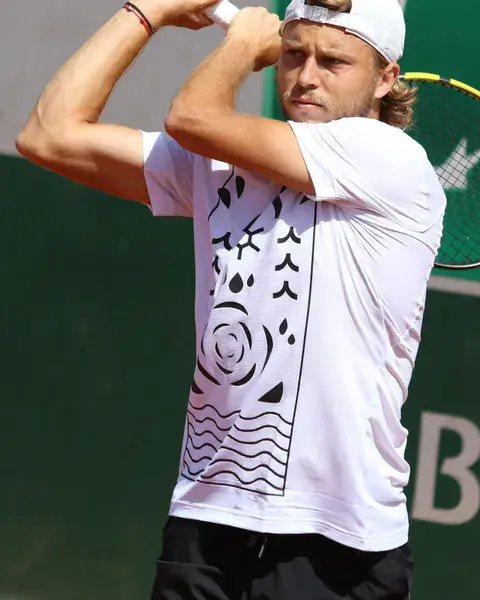 Alexandre MullerFrance · 2017–2026Career-high ranking: 38
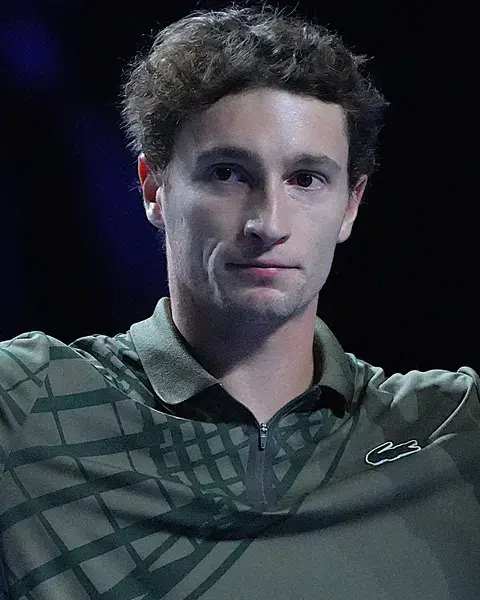 Ugo HumbertFrance · 2018–2026Career-high ranking: 13
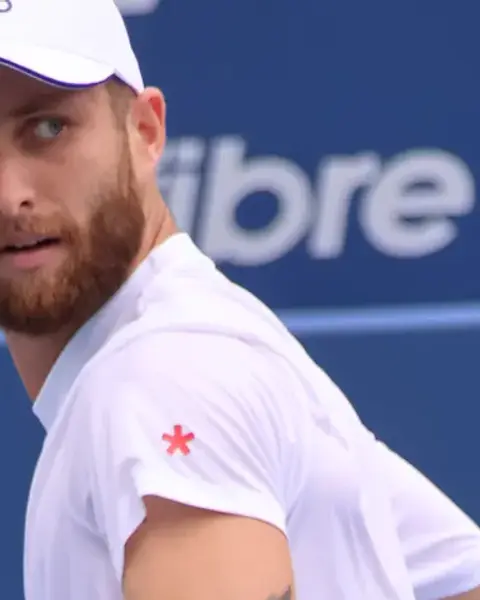 Corentin MoutetFrance · 2018–2026Career-high ranking: 30
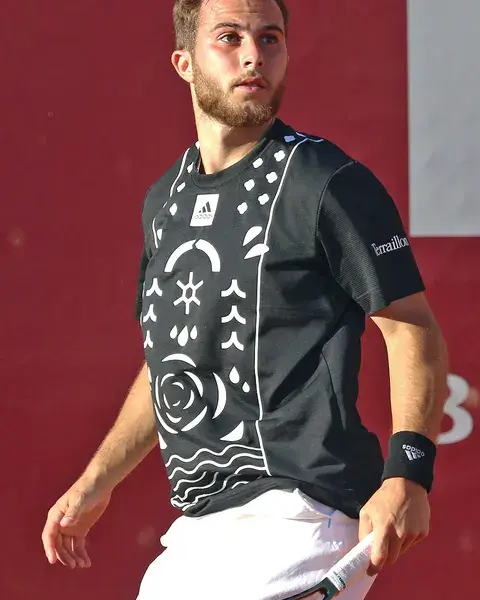 Hugo GastonFrance · 2018–2026Career-high ranking: 58
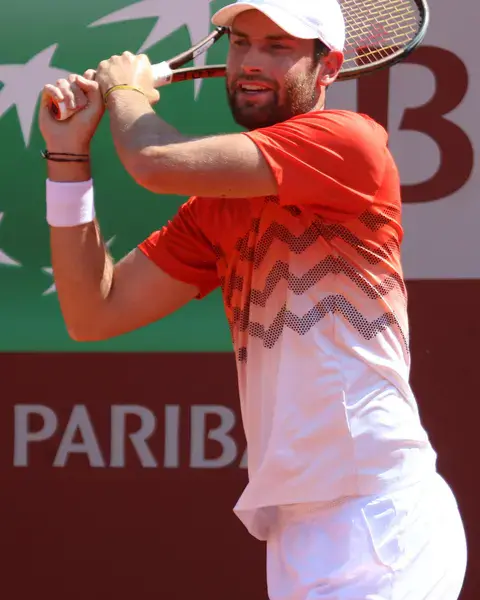 Quentin HalysFrance · 2015–2026Career-high ranking: 46
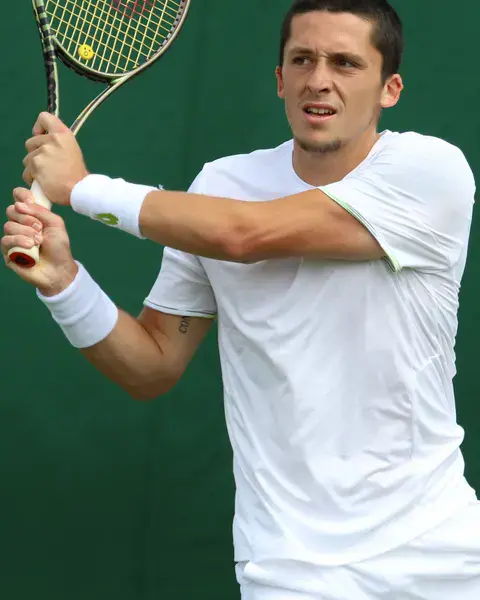 Harold MayotFrance · 2020–2025Career-high ranking: 103
TENNIS TENSION LAB
Check your racquet’s tension today.
Get a high-precision tension reading in under 10 seconds. Tension Lab tracks changes from your first reading and helps you see when to restring.
- High-precision tension measurement. Ready in under 10 seconds.
- Track every change in feel. See the full story over time.
- Time to restring? Never leave it to guesswork.