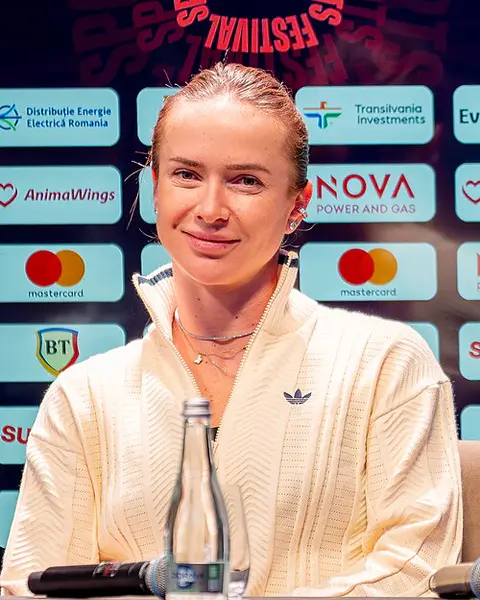
WTA · Active · Ukraine
Elina Svitolina
WTA#9Ranking as of 2026-08-24
Career-high ranking: 3
Elina Svitolina: defence, forehand attack and the return game that changes a set
Elina Svitolina is 174 cm tall. Her 2023 and 2026 Roland-Garros match reports show how forehand attack and return games complement the defensive skills for which she is known.
- Status
- Active
- Age
- Age 32
- Height
- 174 cm
- Playing hand
- Right-handed
- Tour wins
- 457 / 693
- Tour titles
- 20
- Grand Slam titles
- 0
- Career win rate
- 65.9%
Three periods worth studying separately
Svitolina won the 2018 WTA Finals after going 3–0 in the group stage and beating Sloane Stephens in the final. Against a field drawn from the season’s leading players, that achievement reflects the ability to sustain results against changing opponents as well as peak performance in one match.
She returned to the tour in April 2023 after childbirth, won Strasbourg and reached the Roland-Garros quarterfinals and Wimbledon semifinals. The WTA records a 16–3 tour-level clay record in 2025. Her peak season, return to competition and later clay results are more informative as separate periods than as one undifferentiated career winning percentage.
A defensive reputation does not tell you where the winners come from
The official report of Svitolina’s 2023 Roland-Garros fourth-round win over Daria Kasatkina records a 6–4, 7–6(5) score and 20 winners, with 16 coming from the forehand. Those 16 describe a share of her winners in this match, not a share of every shot she played. A defensive reputation should not stop a viewer looking for the forehand that finishes an opportunity.
The same report lists 42 unforced errors and notes that she was broken twice while trying to serve out the match, with a match point missed at 5–4. Neither a negative winner-minus-error calculation nor a failed attempt to close the match determines who eventually wins. Those counts omit other point endings and their score context. She still found a way through in two sets; the interesting question is how she recovered after the missed opportunities.
Bencic in 2026: a set can be closed from the return side
On 31 May 2026, Roland-Garros reported Svitolina’s 4–6, 6–4, 6–0 fourth-round victory over Belinda Bencic. In the opening set, she trailed 2–5 before retrieving one break; in the second, she led 5–2 but failed to serve it out. The decisive response was a further break of serve to take the set 6–4. Getting another chance on return mattered more than producing a flawless closing service game.
That last break began a sequence of 7 straight games: the final game of the second set and all 6 games of the third. It is not a sequence of 7 breaks. The report describes Svitolina dictating with an improved forehand during the comeback, which adds a concrete attacking dimension to the defensive label. This was a win for a quarterfinal place; the report does not establish what happened in the next round.
Judge the recovery shot by the ball that follows
Published descriptions identify Svitolina as a defensive baseliner and highlight the depth of her groundstrokes and the strength of her backhand. When watching, follow a recovery shot through to the opponent’s next contact. A ball that prevents the opponent from stepping in has already changed the attacking opportunity.
Apply the same approach to a backhand down the line. Was the direction change made from balance after a crosscourt exchange, or attempted while stretched? The destination can be identical while the risk is very different. A compilation of winners tends to hide that distinction.
What the 16–3 clay record actually measures
The 2025 figure refers to tour-level clay matches in that season. It is not directly interchangeable with a career clay percentage or a record including lower-level tournaments. Opponent quality, treatment of retirements and the number of events matter when comparing those figures.
Comparisons around a return from maternity leave also need the actual schedule. Time away from competition is not a run of losses, and a small group of early comeback matches cannot establish a player’s long-term level.
Separate creating a chance from converting it
Practise two situations against the same partner: serving at 5–4 and returning at 5–4. Keep each scenario’s results separate. For every point, note whether the first playable ball allowed an attack, whether you kept depth when that chance was absent, and the decision that ended the point. A missed closing chance should lead to a new point plan, rather than force every following ball into a winner attempt.
When reviewing, distinguish an opportunity you created from an error your opponent supplied. Then compare your choices on serve and return instead of judging both only by whether you closed the set. This is a reader’s exercise inspired by the two Paris matches, not a reported Svitolina training session. Begin at a pace where you can judge the ball and maintain balance.
Results by surface
Read each win rate together with its recorded match sample.
- Hard
- 65.9%457 matches
- Clay
- 69.1%175 matches
- Grass
- 54.7%53 matches
- Carpet
- 66.7%3 matches
Career timeline by age
· Age 17
First recorded tour match
The first main-draw tour match covered by the current data set.· Age 18
First tour title
A verified tour-title milestone in this player’s career.· Age 22
Career-high ranking: No. 3
The highest position found in the available weekly singles rankings.· Age 31
Most recent recorded match
The latest tour match included in the current snapshot.
Reviewed sources
A result-based profile built from surface results, rankings, titles, and playing hand. Missing shot-speed, spin-rate, and point-pattern data are not invented.
Player reference page ↗Players to explore next
 Anhelina KalininaUkraine · 2015–2026Career-high ranking: 25
 Dayana YastremskaUkraine · 2016–2026Career-high ranking: 21
 Marta KostyukUkraine · 2018–2026Career-high ranking: 11
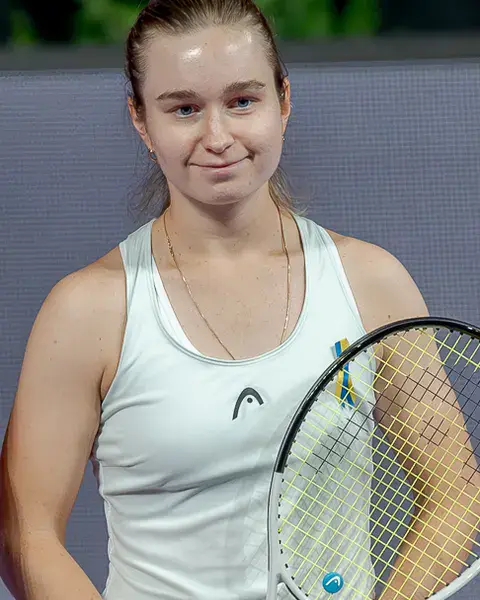 Daria SnigurUkraine · 2022–2026Career-high ranking: 43
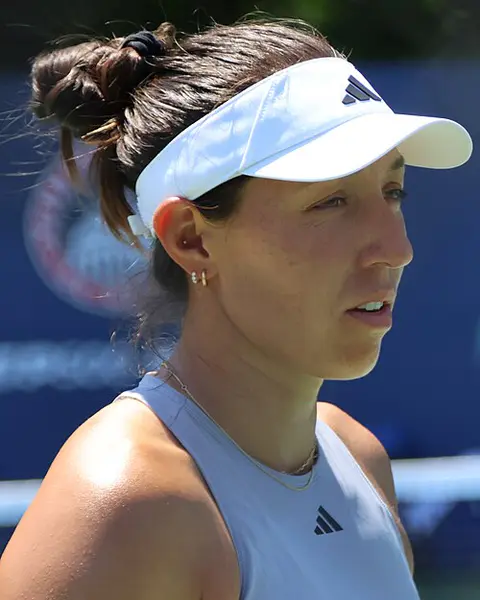 Jessica PegulaUnited States · 2012–2026Career-high ranking: 3
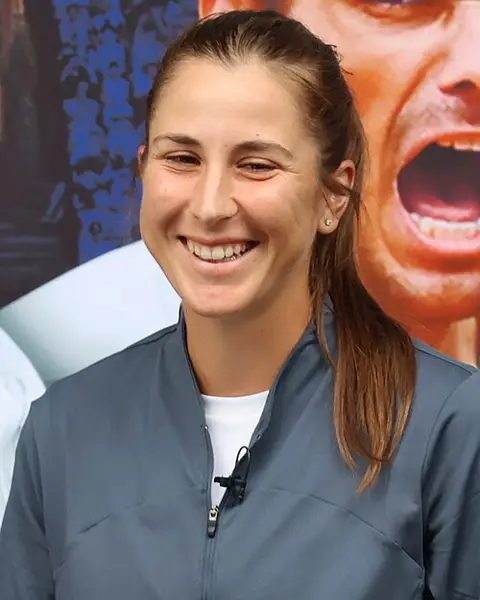 Belinda BencicSwitzerland · 2012–2026Career-high ranking: 4
TENNIS TENSION LAB
Check your racquet’s tension today.
Get a high-precision tension reading in under 10 seconds. Tension Lab tracks changes from your first reading and helps you see when to restring.
- High-precision tension measurement. Ready in under 10 seconds.
- Track every change in feel. See the full story over time.
- Time to restring? Never leave it to guesswork.